
Exploring food in Sudan reveals a culinary tapestry rich with staple grains like sorghum and fragrant spices including cumin, a testament to the country’s historical tapestry of cultural exchanges. Let us get to the heart of Sudanese flavors, where meals are a communal affair and recipes tell tales of the past. As we unwrap the secrets of Sudanese kitchens, anticipate a feast for your senses, highlighting everything from simple breads and stews to elaborate spiced dishes and desserts.
Basic food items in Sudan
- Sudanese cuisine is a rich composite of African, Arabian, Mediterranean, and Middle Eastern influences, utilizing staples like sorghum and millet, and featuring an array of spices like fenugreek, coriander, cardamom, and cumin combined with ingredients like peanuts, lime, and an array of meats to create unique savory dishes and desserts.
- Street food staples like tamayya (chickpea fritters) and ful medames are part of everyday life in Sudan’s towns and cities, and busy markets supply the fresh, local ingredients at the heart of home cooking.
- Sudanese food culture emphasizes hospitality and communal dining, with meals often framed around large gatherings and special occasions; regional variations in the cuisine reflect local ingredients and historical influences, such as Turkish impacts in the North and indigenous practices in the South, demonstrating a culinary identity both rooted in tradition and adapting with modern trends.
Exploring Sudanese cuisine offers
Sudanese cuisine is a flavorful blend of influences from:
- African
- Arabian
- Mediterranean traditions
- Middle Eastern culinary practices
This eclectic mix is a result of Sudan’s rich history of cultural interactions, including periods of Ottoman-Egyptian and British rule, and extensive trade with South Asia and West Africa. The diverse flavors range from savory stews to spicy curries, offering an array of delicious dishes that cater to various tastes.
Staple ingredients in Sudanese cooking include:
- Bread
- Desserts
- Pastries
- Stews
- Rice dishes
These dishes are often complemented with peanuts, lime, and flavorful gravies. From the thin Sudanese flatbread to the hearty meat stew, Sudanese cuisine consists of deeply rooted culinary traditions that reflect the country’s vibrant culture and history.
The staple foods of Sudan
Sorghum and millet form the backbone of Sudanese cuisine, serving as fundamental staples that are versatile in various dishes. Aseeda, a thick porridge made from grains like corn, millet, and sorghum, is a staple food in Sudan, providing a hearty base for many meals. This thick porridge is integral to Sudanese food culture and is often enjoyed with flavorful gravies and stews.
Another essential staple is Kissra, a popular Sudanese bread made with sorghum flour and cooked on a large flat metal tray. This thin Sudanese flatbread is a daily accompaniment to many meals, reflecting the importance of bread in Sudanese cuisine. These staple foods not only nourish the body but also connect Sudanese people to their rich agricultural heritage.
Signature Sudanese spices and flavors
Sudanese cuisine is renowned for its use of a variety of spices that create its distinctive flavors. Sudanese cooking is defined by a wide variety of spices, including:
- fenugreek
- coriander
- cardamom
- turmeric
- cumin
These spices add rich and unique flavors to the cuisine. Among these, cumin stands out, especially in dishes like Kamounia, where it imparts a unique and robust flavor.
Key ingredients such as:
- peanuts
- rice
- beans
- sesame
- okra
also play a crucial role in creating the rich and diverse flavors of Sudanese dishes. These ingredients, combined with the aromatic spices, make Sudanese cuisine a delight for the senses, offering a flavorful blend that is both exotic and comforting.
The role of meat and legumes
Meat and legumes are pivotal in Sudanese cuisine, with dishes often featuring halal meats like:
- beef
- camel
- fish
- chicken
- lamb
Camel meat, particularly the hump, is highly valued for its tenderness, making it a popular choice in Sudanese meals. These meats are often prepared in savory stews that highlight the culinary skills of Sudanese cooks.
Legumes also hold a significant place, with Ful Medames, the national dish of Sudan, showcasing the cultural and nutritional importance of legumes. This hearty dish is made from fava beans and is a substantial source of fiber and protein. It is often served with various toppings such as onions and boiled eggs, demonstrating the versatility and richness of Sudanese food culture.
Celebrating Sudanese dishes from street food to family feasts
Sudanese cuisine offers a remarkable variety of popular Sudanese food dishes that cater to both casual street food enthusiasts and those who enjoy elaborate family feasts. Some popular Sudanese dishes include:
- Kisra: a type of bread made from sorghum or corn flour
- Gollash: a dish made with meat, vegetables, and spices
- Kamounia: a savory meat stew flavored with cumin
These dishes are often served in different styles, reflecting the adaptability and creativity inherent in Sudanese culinary traditions.
Key components and ingredients in these dishes include minced beef in Kofta, sheep or cattle hooves in Kawaari soup, and the unique flavor of camel meat. Whether it’s a street vendor offering a quick snack or a family gathering around a food tray for a festive meal, the diversity of Sudanese cuisine is evident in every bite.
Savory stews and hearty meals
Savory stews, known as mullah, are at the heart of traditional Sudanese cuisine. These hearty meals are often accompanied by flatbreads and are a staple at gatherings such as weddings and family feasts. Mullah is commonly served with Kisra, a type of fermented bread, creating a meal that features harmoniously blended flavors.
Gourrassa, a wheat-based flatbread from Northern Sudan, often accompanies these stews, providing a thick and hearty platform to soak up the rich, spiced sauces. Whether it’s mafrokat bamia, mullah khudra, or mullah raas, these savory stews offer a diverse culinary experience that is central to Sudanese meals.
Sweet treats and desserts
For those with a sweet tooth, Sudanese cuisine offers a variety of delightful desserts. Some popular desserts include:
- Basbousa: a beloved semolina cake, typically served with syrup and yogurt, providing a sweet and moist treat.
- Mandazi: a deep-fried dough with fruit and powdered sugar.
- Baseema: a lemon juice and coconut sponge cake.
These desserts are sure to satisfy your cravings for something sweet.
These sweet treats often incorporate flavors like honey, lemon juice, and sugar syrup, reflecting the Sudanese love for sweet delicacies. Whether enjoyed at the end of a meal or as a midday snack, these desserts are a testament to the richness and variety of Sudanese culinary traditions.
Refreshing beverages to complement your meal
No Sudanese meal is complete without a refreshing beverage to complement the flavors of the dishes. Karkade, a popular hibiscus herbal tea, is traditionally served over ice, offering a refreshing and tangy drink. Sudanese coffee, known for its strong and sweet flavor, is typically served black, providing a robust finish to any meal.
Cinnamon tea is another popular drink in Sudan, favored for its warm and comforting flavor. These beverages not only refresh the palate but also enhance the overall dining experience, making them an essential part of Sudanese food culture.
A glimpse into Sudanese food culture and hospitality
Hospitality is a cornerstone of Sudanese culture, reflecting the host’s generosity and desire to make guests feel at home. Sudanese meals play a central role in social gatherings, bringing together large family gatherings around communal dishes. The focus on communal dining underscores the importance of shared experiences in Sudanese culture.
The Sudanese seniyya, a communal food tray, is typically used during gatherings, holding a robust variety of dishes such as:
- meat stews
- Aseeda
- Kisra
- vegetables
- salads
These communal meals are more than just a way to nourish the body; they are a powerful expression of Sudanese hospitality and culture. Sharing food from a large tray reinforces community bonds and creates a sense of togetherness, making mealtime a cherished tradition in Sudanese households.
Communal meals and social gatherings
Communal dining is a significant part of Sudanese culture, emphasizing the importance of sharing and togetherness during meals. In Sudanese communal dining, the following customs are observed:
- Meat dishes are frequently served on large trays that everyone at the table shares.
- Salads and soups are typically presented in individual bowls.
- The custom in Sudan is to eat with the right hand.
- Flatbread or a stiff porridge made from millet, such as asida or kisra, is often used instead of utensils to partake from the common tray.
Shared meals are a vital aspect of reinforcing social bonds within the community, as the practice of eating from the same tray encourages unity and a sense of belonging. This tradition of communal meals is a beautiful representation of Sudanese culture, where food and fellowship go hand in hand.
Festivals and special occasions
Food plays a central role in Sudanese festivals and special occasions, adding a layer of celebration and tradition to these events. During Ramadan, the breaking of the fast is initiated with dates, followed by starters like soups and a spread of main dishes including lamb stews, asida, and falafel. The meal concludes with desserts such as sweetened pasta and rice pudding, along with traditional drinks.
Eid al Fitr celebrations feature communal meals with dishes like fish, traditional stews, and various sweets, including dates and butter biscuits dusted with icing sugar. Special meals prepared for Moulid al Nabi include lamb with rice and bread, biscuits, juices, and traditional sweets. These festive meals highlight the importance of food in marking significant moments in Sudanese culture.
Daily routines and family traditions
Daily routines and family traditions in Sudanese households revolve around meal preparation and shared dining experiences. Families typically gather around a shared meal tray known as a seniyya during mealtimes, fostering a sense of community. Breakfast often includes a simple meal of bread, cheese, and tea, while lunch tends to be the day’s main meal featuring a stew or porridge with meat or vegetables.
The preparation of meals in Sudanese culture is a family affair, with multiple generations regularly contributing to the cooking process. Cooking in Sudanese homes is more than just meal preparation; it’s a cherished tradition where knowledge and stories are passed down, strengthening familial bonds. This emphasis on family and tradition makes every meal a meaningful and memorable experience.
Regional variations from North to South Sudan
Sudanese cuisine is as diverse as the land itself, with significant regional variations from north to south. South Sudan has been an independent country since 2011, but the two share many culinary traditions. In northern Sudan, Turkish influences dating from the Ottoman-Egyptian era are evident in the prevalence of wheat-based dishes. Farther south, and in South Sudan, cooking relies heavily on indigenous ingredients such as yams, potatoes and legumes, along with traditional practices like fermenting grains.
On the Red Sea coast, Port Sudan is known for its generously spiced fish and seafood. The diverse cooking styles of the many communities of Western Sudan further enrich the country’s culinary landscape, making Sudanese cuisine a vibrant mosaic of flavors and traditions.
Northern Sudan has Turkish influences and wheat-based dishes
The cuisine of Northern Sudan has been significantly shaped by Turkish culinary practices, evident in the prevalent use of wheat-based ingredients. One notable dish is gourrassa, a wheat-based flatbread served in a circular shape, particularly significant during food shortages. This influence is a testament to the long period of Ottoman-Egyptian rule in the 1800s, which have left a lasting mark on Northern Sudanese cuisine.
Modern Sudanese cuisine continues to be influenced by various cultures, including Persian, Syrian, and Turkish cuisines, enriching the culinary traditions of Northern Sudan. These influences have helped create a unique culinary identity that blends local and foreign flavors seamlessly.
Southern Sudan uses indigenous ingredients and fermented foods
In Southern Sudan, traditional food heavily relies on locally sourced ingredients such as legumes, sorghum, yams, and okra, along with diverse protein sources like goat, mutton, chicken, and fish. Porridges like aseeda are central to South Sudanese cuisine and often incorporate sorghum, bafra, mouloukhiya, and peanut butter, showcasing the region’s reliance on indigenous ingredients.
Fermenting grains, particularly sorghum, is a traditional culinary practice in Southern Sudan, adding depth and complexity to the dishes. This practice not only preserves the grains but also enhances their nutritional value, making fermented foods a staple in Southern Sudanese diets.
River and coastal fish dishes
Fish is important along the Nile and, in South Sudan, in the rivers and vast swamps of the Sudd. Kajaik, a well-known South Sudanese stew made with dried fish, is commonly served with porridge and vegetables. On the Red Sea coast, the cooking of Port Sudan makes generous use of sea fish and seafood.
The use of river fish and seafood highlights the region’s diverse culinary landscape, which brings together inland and coastal influences. Some fish and seafood enjoyed in Sudanese and South Sudanese cooking include:
- Nile perch
- Tilapia
- Shrimp
- Lobster
- Crab
These dishes are a testament to the richness and variety of Sudanese cuisine, offering a unique taste of the region’s natural bounty.
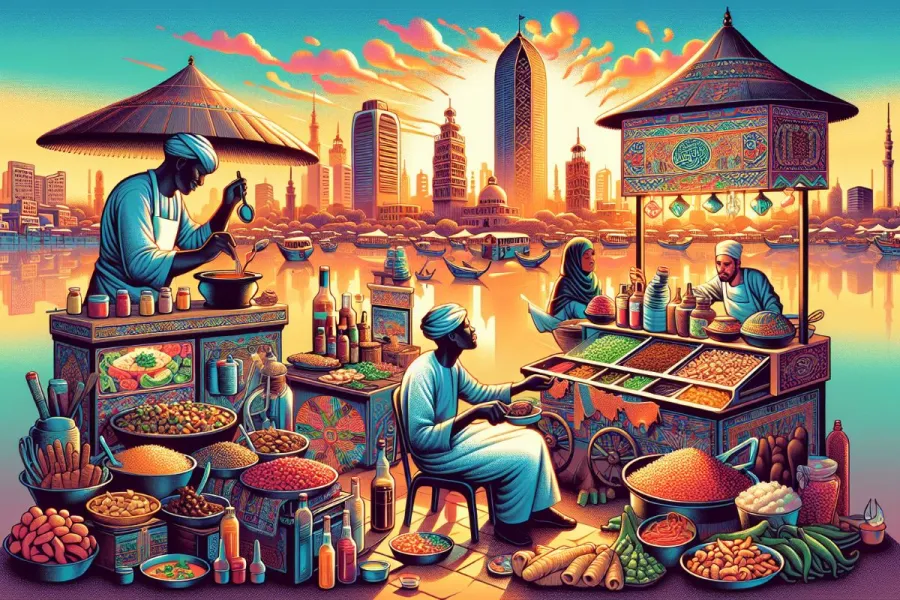
Street food and markets
In Sudan’s towns and cities, everyday eating happens as much on the street and in the market as at home. Simple stalls and small eateries serve local favorites from morning to night, alongside dishes that show Egyptian and wider Middle Eastern influences.
Street food staples
Street food is a vibrant and integral part of Sudanese food culture. Tamayya, or chickpea fritters, are a popular choice, made from a seasoned mixture of mashed chickpeas with spices like cumin, lemon juice, coriander, and garlic. These savory fritters are commonly served in a sandwich or as a snack with various dips, showcasing their versatility in Sudanese street food culture.
Another staple is Ful Medames, a dish made from fava beans sautéed with onions and garlic and simmered with broth or water. This dish is typically garnished with:
- fresh tomatoes
- hot peppers
- cilantro
- parsley
- olive oil
It is served with pita bread, offering a harmonious blend of flavors that is loved by many.
Sudanese street food has a festive, family-friendly atmosphere, with local specialties served next to Middle Eastern favorites.
Markets and local ingredients
Markets play a crucial role in daily life in Sudan, providing a vast array of fresh produce and essential food items. These bustling markets are the lifeblood of Sudanese cuisine, offering everything from:
- vegetables
- grains
- spices
- meats
The vibrant scenes at these markets reflect the rich food culture of Sudan, where shopping for ingredients is an integral part of the culinary process.
Local ingredients sourced from these markets are used in both traditional and modern dishes, ensuring that the flavors of Sudan remain authentic and rooted in the region’s agricultural heritage. The availability of fresh, high-quality ingredients is a testament to the importance of markets in maintaining Sudan’s culinary traditions.
The evolution of Sudanese cooking from past to present
The foundation of Sudanese cuisine can be traced back to ancient Nubian and Kush kingdoms, where agricultural practices introduced staples like millet and sorghum. Traditional cooking methods such as drying, smoking, and fermenting were used to preserve food, laying the groundwork for modern Sudanese culinary practices. The spice trade, particularly with the Middle East and Asia, brought new flavors to Sudanese cuisine, enriching it with spices like cumin and coriander.
Ottoman-Egyptian rule over Sudan popularized wheat-based dishes and introduced coffee, and refined sugar, while British colonialism influenced the food culture with meals like breakfasts and sandwiches. In recent times, Sudanese cuisine has interacted with global food trends, leading to adaptations in traditional recipes and the emergence of fusion dishes that reflect the integration of various global influences.
Ancient roots and agricultural practices
Farming in what is now Sudan goes back thousands of years, beginning with the harvesting of wild grains and the herding of animals. Over time, people along the Nile and in the surrounding plains turned to cultivating sorghum and millet, and cattle herding made milk and other dairy products part of the diet.
The ancient Nubians of northern Sudan grew wheat and barley along the Nile, grains that have held long-standing significance in the region. These ancient agricultural practices laid the foundation for Sudanese cuisine, influencing the staple foods and cooking methods that are still prevalent today.
Influence of trade routes and external cultures
Trade with the Arabian Peninsula, Egypt and the wider Mediterranean brought spices, vegetables and fruits to Sudan. Later, crops that originated in the Americas reached the region through global trade, including:
- corn
- cassava
- peanut
- sweet potato
- tomato
- common beans
- chilli peppers
- pumpkin
- potatoes
These crops substantially affected the agricultural produce available for Sudanese cuisine. The robust trade with Africa, Asia, and the Mediterranean led to the introduction of spices such as coriander and ginger, as well as new vegetables like aubergines.
Red Sea trade connected Sudan with the Arabian Peninsula and South Asia, which helped bring spices and slow-cooked, richly spiced stews into Sudanese cooking. These external influences have enriched Sudanese cuisine, making it a melting pot of diverse flavors and culinary traditions.
Modern adaptations and global trends
Modern Sudanese cuisine has absorbed multicultural influences and incorporates a diverse mix of flavors, including West African, Mediterranean, indigenous East African, and South Asian elements. Contemporary Sudanese dishes often include staple ingredients such as wheat, beef, lamb, tomatoes, sesame seeds, and rice, showcasing the adaptation of traditional cooking to modern tastes and nutritional trends.
Globalization has led to the evolution of Sudanese cuisine, with traditional recipes being adapted and new fusion dishes emerging. This integration of various global influences has created a dynamic and ever-evolving culinary landscape in Sudan, reflecting the country’s openness to new ideas and flavors while preserving its rich culinary heritage.
Sudanese foods
Sudanese cuisine is a rich tapestry of flavors and traditions, shaped by a diverse range of influences from African, Arabian, Mediterranean, and Middle Eastern cultures. From staple foods like sorghum and millet to signature spices such as cumin and fenugreek, Sudanese cooking offers a unique and delightful culinary experience. The importance of halal meats and legumes, the variety of savory stews, and the indulgence in sweet treats all contribute to the richness of Sudanese food culture.
Street food and markets, the role of communal meals and social gatherings, and the regional variations from North to South Sudan further highlight the diversity and vibrancy of Sudanese cuisine. The evolution of cooking practices from ancient times to modern adaptations reflects the dynamic nature of Sudanese culinary traditions. We hope this guide has inspired you to explore the delicious and diverse world of Sudanese food, and perhaps even try your hand at some traditional Sudanese dishes.
Sudanese cuisine's staple foods are sorghum, millet, aseeda, and kissra, which are commonly used in various dishes.
Popular spices used in Sudanese cooking include fenugreek, coriander, cumin, cardamom, turmeric, cloves, cinnamon, ginger, garlic, chilies, saffron, black pepper, and dried mint, offering a rich and flavorful culinary experience.
Ful Medames, made from fava beans and served with various toppings like onions and boiled eggs, is the national dish of Sudan.
Sudanese people typically enjoy their meals communally, sharing food from a large tray called a seniyya and using flatbread or millet porridge to eat together. This fosters a sense of community and togetherness during meal times.
Some traditional Sudanese desserts are basbousa, mandazi, and baseema, which feature ingredients like semolina, fruit, powdered sugar, lemon, and coconut. These desserts are a delicious representation of Sudanese culinary traditions.