
Steel vats and low temperature fermentation are some of the techniques that helped to make wines from Australia and New Zealand famous.
Oceania is part of the New World of wine. Using the latest technology in the winery and the vineyard, along with stable climates and plenty of space, Australia and New Zealand have proved that the New World can compete with the great European regions in making top-quality wines.
Wine in Australia
The first vines arrived in Australia with the First Fleet in 1788 and were planted in Sydney by Governor Arthur Phillip. A real wine industry grew from the mid-19th century, but for a long time it made mostly fortified wines for the home market. Since the 1980s, Australia has become a major world producer, with a range of highly regarded whites and reds.
A model for the New World of wine, Australia sets aside many of the traditions and strict rules of the Old World. Its winemaking is innovative and consumer-oriented, and it can compete with the best internationally.
European grape varieties were the starting point, since Australia has no native wine grapes, but Australian wines have their own style. Today the country makes ripe, fruity wines for every day at very affordable prices, as well as top-notch specialty wines.
The Australian wine industry has mastered technology. Wines may come from a single vineyard, or be blended across regions to achieve the desired style, and grapes can travel long distances to the winery in perfect condition. Australian winemakers are trained to make flavorful, clean, fruity wine even in hot, dry conditions. Australia was a pioneer of refrigerated, temperature-controlled fermentation in stainless steel, a technique that helped transform white winemaking around the world.
Australian wine landscape
Some Australian regions have climates similar to California's, so it is not surprising that many of the same popular varieties are grown. But Australians, true to their independent streak, have made several styles their own.
Shiraz (Syrah) is Australia's best-known red, but the lesser-known Durif would be a welcome guest at any table. It is a specialty of Rutherglen, in northeastern Victoria, along with the area's unusual sparkling reds. Rutherglen is also famous for rich fortified wines, especially Rutherglen Muscat and Topaque (formerly called Tokay).
Victoria also has the Pyrenees region (not to be confused with the mountains between France and Spain), where vines have been grown since the 1960s and Shiraz, Cabernet Sauvignon and Chardonnay do well.
Once largely home to apple orchards, the Mornington Peninsula, south of Melbourne, has turned to winemaking in recent decades. Dozens of wineries, many with cellar doors open for tastings, make the area's well-regarded Pinot Noir and Chardonnay.
McLaren Vale, south of Adelaide, lies between the Sellicks Hill Range to the south and Gulf St Vincent to the west. It enjoys a Mediterranean climate with dry summers, and its long, warm days and sea breezes are ideal for ripening grapes.
South Australia has never been hit by phylloxera, the pest that devastated vineyards in Europe and parts of Victoria, so some of its vines are still producing more than a hundred years after they were planted. McLaren Vale is widely acknowledged as one of the premier producers of Shiraz, with small berries that give complex, intense wines with good aging potential. Harvest usually runs from February to April.
But Shiraz isn't the region's only excellent wine. Cabernet Sauvignon and Grenache are also well regarded, and old-vine Grenache thrives in its soils.
The Clare Valley, settled in the 1840s by English, Irish and Polish immigrants, is one of Australia's oldest and most scenic regions, and much of its architecture still reflects those early days.
The climate is continental, with hot summer days and cool nights. Some vineyards sit as high as 500 meters (1,640 feet), on red soils over rock.
Shiraz and Cabernet Sauvignon are important here too, but the Clare Valley is best known for its dry, crisp Riesling, which has won international awards.
Since the 1980s, Australia has grown into one of the world's largest wine exporters, for a time selling more wine to the UK than France did, and it has earned its reputation as one of the world's finest producers.
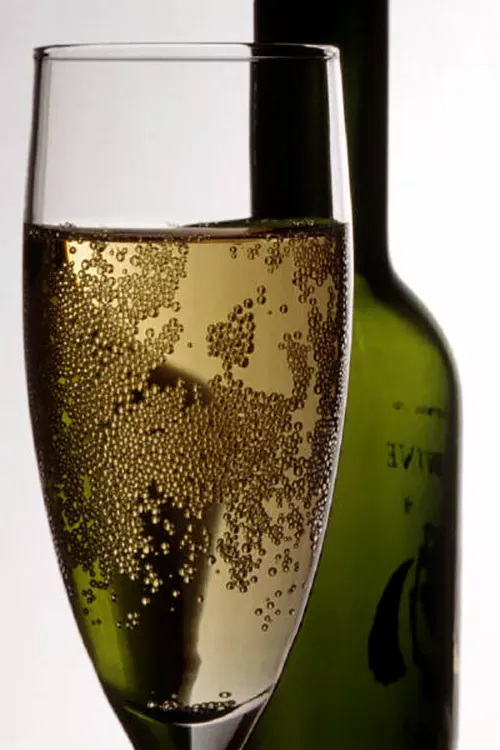
Wine in New Zealand
New Zealand has become an international player in the world of wine only since the 1980s, quite a feat for a country of about five million people. It has around 700 wineries, is known for quality, and much of its wine is made for export.
New Zealand wine landscape
The first vines were planted in 1819, and wine was being made by the 1830s, but conservative attitudes toward alcohol held back the industry for a long time. From the 1960s and 1970s things changed: with investment from home and abroad, New Zealand set out to make the most of its maritime climate, ideal for fresh, aromatic wines, and began experimenting with grape varieties.
New Zealand lies farther south than most of Australia's wine regions and is generally cooler. Its total production is a fraction of Australia's, but it keeps growing. Alongside large producers such as Brancott Estate (formerly Montana), Villa Maria and Nobilo, there are many enthusiastic small estates and boutique wineries, willing to experiment and making very good wines.
Of the two main islands, the North Island is warmer and has grown vines for longer: Mission Estate, founded by Marist missionaries in Hawke's Bay in 1851, is the country's oldest winery. Hawke's Bay is known for Bordeaux-style reds, Syrah and Chardonnay, Auckland's Waiheke Island for reds, and Martinborough, in the Wairarapa region near Wellington, for Pinot Noir.
The South Island is cooler, but it has the largest wine region: Marlborough, home to most of the country's vineyards and world famous for Sauvignon Blanc. Central Otago has the world's southernmost vineyards and has proved one of the great regions for Pinot Noir. Vines are planted on hillsides to make the most of the sun and reduce the risk of frost, and the low-yielding vineyards produce astonishingly rich Pinot Noir with concentrated flavor and aroma.
Marlborough Sauvignon Blanc was a revelation in the 1980s and soon an international hit, and New Zealand is credited with creating a style of Sauvignon Blanc all its own. You will often read words like zesty, pungent, intense, or freshly cut grass in descriptions of these wines.
Australia and New Zealand are New World countries, and their wines are popular around the world.
Last reviewed November 2026.