Cantonese recipes are a reflection of the diverse and cosmopolitan Cantonese cuisine.
Cantonese cuisine is varied and cosmopolitan. Characterized by gentle seasoning, fresh ingredients and slow, careful preparation, it may not seem the obvious choice for a restaurant. Yet Cantonese food remains a favorite of millions. Originating in Guangdong province, in southern China, this style of cooking offers a menu with something for everyone.
Since Canton, now called Guangzhou, is a port city near the coast, you might expect seafood to be a prominent part of that menu. And so it is. Live fish and other seafood are often kept in a tank until it's time to cook them.
Since the food is so fresh, there is no need for heavy spices that would overwhelm its taste. Whether the dish is a whole steamed fish or stir-fried shrimp, you can depend on a Cantonese dish being as fresh as can be.
Stir-frying is a popular technique, but steaming and roasting play an equal role. Beef chow fun, a popular stir-fried dish of wide rice noodles, is a great example. Roasted meats are a favorite at Cantonese barbecue shops, which keep them fresh with a constant turnover. Cantonese roast duck, known for its marinade and shiny, reddish-brown crispy skin, is a standout, and char siu pork, glazed with a sweet, savory sauce often made with hoisin and five-spice powder, is always popular. Even barbecued meats come with light sauces.
The sauce that highlights a Cantonese dish may be as simple and delicious as hoisin. This thick, dark sauce is dense, but its taste is not overwhelming. Made from fermented soybean paste, sugar, garlic, vinegar and spices, it gives just the right touch to roast meats. Soy sauce also plays a crucial role in dishes like beef chow fun, and oyster sauce, a Cantonese invention, is another favorite.
Many other seasonings can be found on the Cantonese chef's shelf. Ginger, spring onion and sesame oil are ever present. Ginger scallion dipping sauce, the traditional accompaniment to white cut chicken, is a must-have. Five-spice powder, usually a blend of star anise, cloves, Chinese cinnamon (cassia), Sichuan pepper and fennel seed, is found in many Cantonese kitchens, but it is always used sparingly.
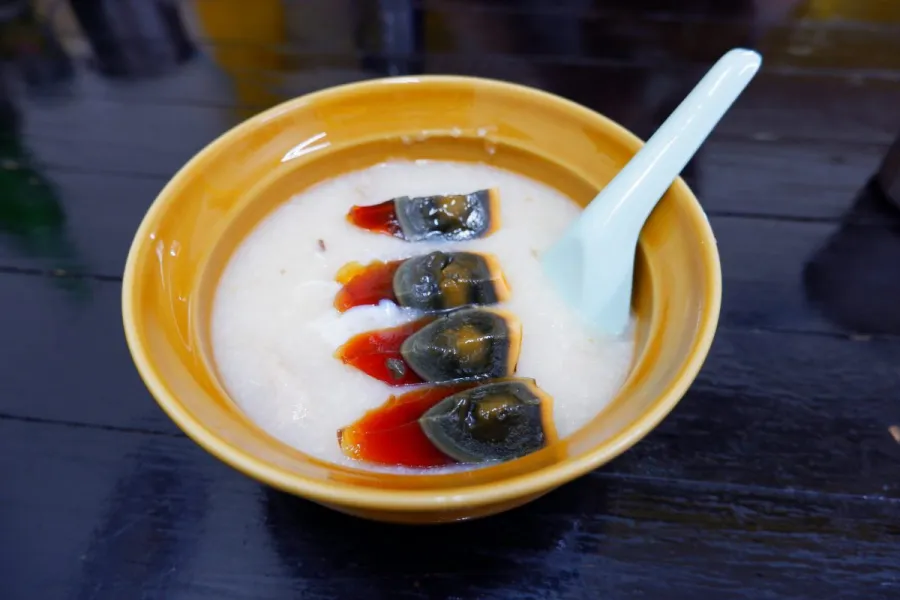
Cantonese cooking is not all meat, spiced or otherwise. Congee, a rice porridge, is a traditional dish, particularly for breakfast. Unlike its Western counterparts, congee is made from white rice simmered until it is practically a thick soup, the grains almost unrecognizable. It is often served with salted duck eggs or century eggs, duck, chicken or quail eggs preserved for weeks or months in a mixture of clay, ash, lime and salt.
Slow-cooked soup is another traditional Cantonese dish that takes a long time to prepare, though fortunately not as long as century eggs. In one version, a whole chicken is simmered in water for hours. The broth is then lightly seasoned and served warm.
Last, but very far from least, we owe the Cantonese the tradition of dim sum, an array of small dishes such as dumplings and buns, often stuffed with meat or seafood. No trip to a Cantonese restaurant is complete without ordering at least a few for the whole table.
Some critics complain that Cantonese cooking is bland. Don't you believe it. Subtle, fresh and light are often just what is called for. Try it and see for yourself.
Beyond the Cantonese style
Cantonese food is particularly appealing for its mild flavors and fresh ingredients. It emphasizes freshness and contrasts of flavor and texture, and sweet and sour dishes are among its best-known characteristics. Cantonese cuisine is one of the traditional great cuisines of Chinese cuisine, and there is much more to explore about Chinese food and recipes.