
Schaschlik-Rolle
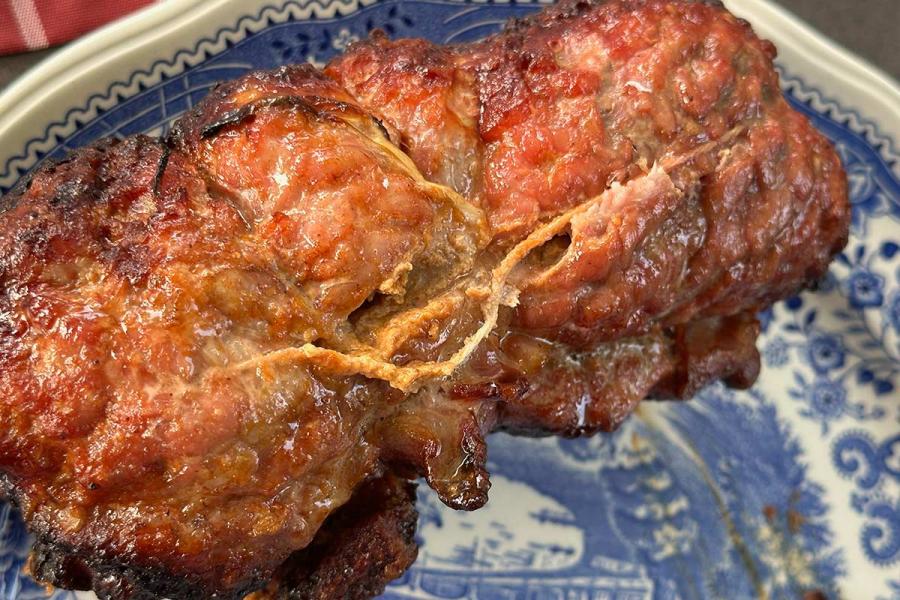
This is not the small street-market skewer. Schaschlik-Rolle is the large-format version: thin pork slices wrapped around streaky bacon and finely shredded cabbage, rolled into a generous log, skewered, and cooked slowly over charcoal embers for a full hour, turning frequently until the outside is deeply caramelised and the inside is tender all the way through. Each roll is a meal in itself, a serious piece of meat for a serious outdoor occasion, best eaten with bread, cold potato salad, and a good German beer.
Ingredients
Instructions
Prepare the cabbage
Shred the cabbage as finely as possible. Toss with 1 teaspoon of salt, mix well, and leave to rest for 20 minutes. Squeeze firmly with your hands to remove the excess liquid. Set aside.
Marinate the pork
Whisk together the vegetable oil, vinegar, grated onion, minced garlic, paprika, cayenne pepper, 1if using, teaspoon salt and ground black pepper in a large bowl. Add the pork slices and turn well to coat. Cover and refrigerate for at least 2 hours, or overnight.
Build the rolls
Lay out a sheet of plastic wrap or parchment paper on a work surface. Arrange roughly a quarter of the pork slices in an overlapping layer to form a rectangle approximately 8 by 10 inches. The slices should overlap enough that there are no gaps.
Lay a quarter of the bacon slices over the pork in a single layer, covering it evenly.
Spread a quarter of the squeezed cabbage over the bacon in an even layer, leaving about an inch clear at the far edge.
Starting from the near edge, roll the whole thing up tightly into a firm log, using the plastic wrap or parchment to help keep it compact. Squeeze gently to consolidate the shape. Remove the plastic or parchment and secure the meat with cooking string. Repeat for the remaining three rolls.
Push one heavy-duty metal skewer through each roll. Ideally, lengthwise; this keeps the roll from spinning on the skewer and holds the shape during cooking. If you don't have only one skewer per roll, push two rolls into one skewer, as needed.
Cook over charcoal
Prepare your charcoal fire. The rolls need to cook over embers, not flames — let the charcoal burn down until it is glowing and covered in a layer of grey ash. There should be steady, even heat rather than flaring flame.
Place the skewers over the grill, or rest them across the rim of a mangal-style grill as in the traditional method. The rolls should sit about 4 to 5 inches above the embers.
Cook for approximately 1 hour, turning every 10 to 15 minutes. The exterior should caramelise gradually — deep golden-brown and glistening from the rendered bacon fat, with darkened edges on the more exposed sides. Do not rush this with high heat; the long, slow cook is what makes the meat tender throughout.
The roll is done when the exterior is deeply caramelised, the juices run clear when the thickest part is pierced, and the internal temperature reaches 160°F (71°C). If the outside is browning too fast before the inside is cooked, move the rolls to a cooler part of the grill or raise them slightly further from the embers.
Rest and serve
Remove from the grill and rest for 5 to 10 minutes before removing the skewers. Serve whole alongside bread and the salads. The roll can be sliced at the table or eaten from the skewer.
Notes
Pork collar is the right cut. Also sold as pork neck or pork neck fillet, it has enough fat marbling to stay moist during the long cook. Pork shoulder works as a second choice. Lean cuts like pork loin will dry out.
Squeeze the cabbage properly. Excess moisture in the cabbage will steam the inside of the roll rather than letting it roast. After salting and resting, squeeze firmly until no more liquid comes out.
Charcoal embers, not flames. This is the most important technical point. Flames flare and burn the outside before the inside is done. Wait until the charcoal has fully caught and burned down to glowing embers with a grey-ash surface. A mangal grill — the deep metal bowl design common at German barbecues — is ideal for this because it holds the embers in a contained, consistent bed.
Turn frequently. Every 10 to 15 minutes is right. The rotation ensures even caramelisation and prevents any one side from burning. Use the time between turns for the bread, the beer, and the company.
You can use two rolls per skewer
Variations
Add a layer of thinly sliced onion rings between the bacon and the cabbage for extra sweetness and moisture.
Rub the outside of the finished roll lightly with a little sweet paprika and oil just before it goes on the grill for a more pronounced colour and spice on the crust.
Some versions include a thin layer of German mustard spread over the pork before the bacon goes on, adding a gentle heat and helping the layers adhere.
Source
Food in Europe
Schaschlik comes to Germany from the Caucasus, travelling west through Russia and the Soviet Union during the 20th century. The original shashlik — the word comes from Crimean Tatar — is simple skewered meat, marinated and grilled over fire, common across Georgia, Armenia, Azerbaijan, and the wider Caucasian and Central Asian region. Soviet influence spread the dish through the Eastern Bloc, and in East Germany (the DDR) it became a fixture at outdoor markets, funfairs, and public events, where small cubes of pork on skewers were one of the most reliably available grilled foods.
After German reunification in 1990, Schaschlik spread westward and embedded itself in German outdoor food culture broadly. Along the way, the German version evolved away from its Central Asian origins. The addition of bacon and cabbage — both deeply Central European ingredients — is a German development, as is the larger roll format, which transforms the street snack into a centrepiece for a garden gathering.
The Schaschlik-Rolle, specifically, belongs to the tradition of communal outdoor cooking — the kind of meal where the cooking is part of the occasion. The hour over charcoal is not an inconvenience; it is the point. You stand around the grill with bread and beer, turning the rolls, talking, and waiting for dinner. In that sense it has more in common with an Argentine asado or a Georgian feast than with a quick weeknight barbecue, and it is best understood in those terms.