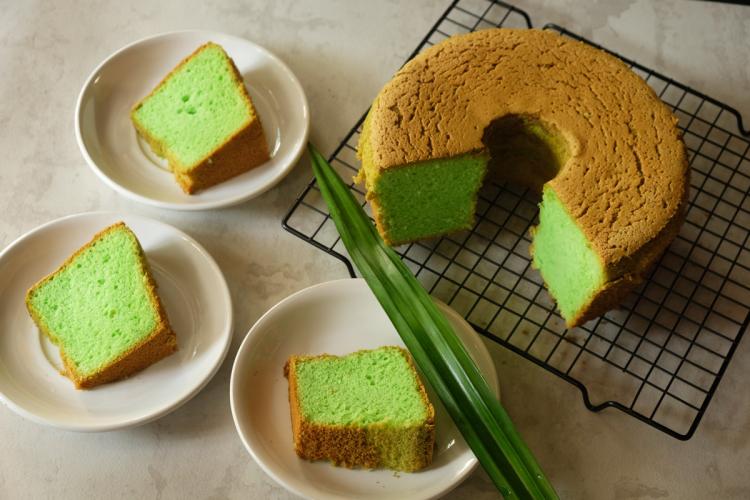
Pandan chiffon cake
A guide to Singapore’s unoficial national dessert.
Singapore’s vibrant green pandan chiffon cake stands as more than just a dessert, it’s a symbol of national pride that has captivated food lovers across Southeast Asia since the 1960s. This ethereal cake combines the light, fluffy texture of classic chiffon with the distinctive tropical flavors of pandan and coconut milk, creating a dessert that’s both visually stunning and utterly delicious.
The emerald-hued cake rose to iconic status alongside Singapore’s modernization, becoming so beloved that it earned recognition as the nation’s unofficial national dessert. Its popularity spread throughout Malaysia and Indonesia, cementing its place as a regional classic that represents the sophisticated fusion of Western baking techniques with Southeast Asian ingredients.
In this comprehensive guide, you’ll master every aspect of making pandan chiffon cake, from understanding the unique pandan flavour to achieving the perfect light texture. We’ll cover essential techniques, troubleshoot common problems, and ensure your homemade version rivals the best bakeries in Singapore.
Understanding pandan (the Asian vanilla)
Pandan (pandanus amaryllifolius) serves as the heart and soul of this iconic cake, earning its nickname as the “vanilla of Southeast Asia” through its complex and captivating aroma. This tropical herbaceous plant produces leaves that contain volatile compounds, particularly 2-acetyl-1-pyrroline, the same compound responsible for the distinctive fragrance of jasmine rice and basmati rice.
The flavor profile of pandan extends far beyond simple vanilla comparisons. Fresh pandan leaves deliver earthy, sweet notes with subtle hints of coconut, almond, and grass, creating a multi-layered sensory experience that’s both familiar and exotic. The aroma is equally complex, offering floral undertones that complement its nutty and vanilla-like base notes.
In Southeast Asian cuisine, pandan leaves serve multiple purposes beyond desserts. They’re used to flavor rice dishes, curries, and beverages, while also functioning as natural wrappers for savory foods. This versatility demonstrates the ingredient’s fundamental role in regional cooking traditions.
For home bakers, pandan is available in several forms:
- Fresh or frozen pandan leaves: Provide the most nuanced flavor and natural color, preferred for authentic results
- Pandan extract: Liquid form that may be colorless or pale green, offering concentrated flavor
- Pandan paste: Thicker consistency with added coloring, delivering intense flavor and vibrant green color
Fresh pandan leaves typically yield the best results, but frozen pandan leaves work well when fresh aren’t available. Asian grocery stores and online retailers like Amazon stock various pandan products, making this essential ingredient accessible to bakers worldwide.
What is pandan chiffon cake
- Pandan chiffon cake is Singapore’s iconic national dessert featuring vibrant green color and aromatic pandan flavor
- The cake combines light, fluffy chiffon texture with unique Southeast Asian pandan and coconut milk flavors
- Use ungreased tube pan and cool cake upside down for proper rise and texture
- Fresh pandan juice or pandan paste can be used for authentic flavor and natural green coloring
- Proper meringue technique with stiff peaks is crucial for achieving the signature airy texture
Pandan chiffon cake represents the perfect marriage of American chiffon cake technique with Southeast Asian tropical flavors. This beloved dessert gained prominence in Singapore during the late 1950s and 1960s, coinciding with increased availability of mechanical mixers and home ovens that made the delicate chiffon method accessible to home bakers.
The cake’s signature pale green color comes from pandan leaves, a tropical plant native to Southeast Asia. When properly made, the cake displays a stunning natural emerald hue that’s completely achieved through botanical ingredients, though some bakers enhance the color with pandan paste for extra vibrancy.
What sets this cake apart is its incredibly light, airy texture combined with the complex flavor profile of pandan and coconut milk. The result is a dessert that practically melts on your tongue while delivering layers of tropical taste that have made it a staple on Singapore Airlines menus and a must-try item for visitors to the region.
The cake’s popularity extends far beyond Singapore’s borders, becoming a beloved dessert throughout Malaysia and Indonesia. Its status as a cultural icon reflects both the technical skill required to master chiffon techniques and the deep appreciation for pandan as a defining flavor of Southeast Asian cuisine.
Essential ingredients for perfect pandan chiffon cake
Creating an exceptional pandan chiffon cake requires understanding how each ingredient contributes to the cake’s structure, flavor, and signature texture. This precise balance of components works together to achieve the light, airy crumb that defines quality chiffon cakes.
Complete ingredient list
The amounts are estimated for a 10-inch tube pan yielding about 12 servings.
| Ingredient | Amount | Purpose |
|---|---|---|
| Cake flour | 1 cup (120g) | Creates tender crumb |
| Eggs | 6-7 large | Structure and leavening |
| Coconut milk | 1/2 cup (120ml) | Moisture and tropical flavor |
| Vegetable oil | 1/4 cup (60ml) | Tenderness and moisture |
| Superfine sugar | 2/3 cup (120-130g) | Sweetness and meringue stability |
| Pandan juice/paste | 1 tbsp juice or 1 tsp paste | Signature flavor and color |
| Baking powder | 1 1/4 tsp | Additional lift |
| Salt | 1/4 tsp | Flavor enhancement |
| Cream of tartar | 1/2-3/4 tsp | Meringue stabilization |
Understanding each component
Cake flour forms the foundation of the fine crumb characteristic of excellent chiffon cakes. Its lower protein content compared to plain flour minimizes gluten development, preventing the tough texture that would compromise the cake’s signature lightness. If you can’t find cake flour, substitute with all-purpose flour minus 2 tablespoons per cup, plus 2 tablespoons cornstarch.
Coconut milk serves a dual purpose, adding essential moisture while enhancing the pandan flavour with complementary tropical notes. The fat content contributes to the cake’s rich mouthfeel without weighing down the delicate structure. Full-fat coconut milk provides the best results, though coconut cream can substitute for even richer flavor.
Eggs function as the primary structural element, with egg yolks providing richness and moisture while egg whites create the meringue foundation. The whipped egg whites trap air bubbles that expand during baking, creating the cake’s characteristic height and airy texture.
Cream of tartar acts as a crucial meringue stabilizer, helping egg whites achieve and maintain firm peaks while preventing weeping or collapse. This acid component ensures your meringue holds its structure throughout the folding and baking process.
Vegetable oil remains liquid at room temperature, unlike butter, which helps maintain the cake’s tender texture even after refrigeration. This choice prevents the cake from becoming dense or heavy when stored.
Equipment and pan requirements
The right equipment makes the difference between success and frustration when making pandan chiffon cake. Investing in proper tools ensures consistent results and makes the process more enjoyable.
The chiffon tube pan
An ungreased aluminum tube pan with removable bottom is absolutely essential for proper cake rise and easy removal. The tube design allows heat to circulate through the center, ensuring even baking and preventing dense spots. The ungreased surface gives the batter something to grip as it rises, preventing collapse.
Avoid non-stick chiffon pans, as the slippery surface prevents the batter from climbing the walls properly. Similarly, glass or ceramic pans don’t conduct heat as efficiently as aluminum, leading to uneven results.
Standard sizes include 7-inch, 8-inch, 9-inch, and 10-inch pans. If using a different size, adjust ingredient quantities proportionally and monitor baking times carefully.
Tools for success
A stand mixer with whisk attachment provides the most reliable results for creating stable meringue, though a handheld electric mixer works with extra attention to timing. The consistent power ensures proper air incorporation without overbeating.
A food processor efficiently creates smooth pandan juice from fresh leaves, while a fine mesh strainer or cheesecloth ensures proper extraction. Alternative methods include using a blender, though results may be less smooth.
Additional helpful tools include:
- Large balloon whisk for hand folding
- Offset spatula for pan release
- Digital scale for accurate measurements
- Clean kitchen towels for drying equipment
Baking instructions
Success with pandan chiffon cake requires methodical preparation and precise technique. Follow these detailed steps to achieve bakery-quality results in your home kitchen.
Making pandan extract from fresh leaves
Begin by preparing your pandan juice, as this process requires time for optimal extraction. Place chopped pandan leaves (about 20 leaves or 70-90g) in a food processor with 150ml water. Blend thoroughly until the mixture becomes a bright green pulp.
Strain the mixture through cheesecloth or a fine mesh strainer, pressing the pulp to extract maximum liquid. For enhanced color, allow the strained juice to settle for several hours—the deeper green sediment that forms contains concentrated flavor and color compounds.
Store fresh pandan juice in the refrigerator for up to 3 days, or freeze in ice cube trays for longer storage. This homemade extract provides superior flavor compared to commercial alternatives.
Mastering the meringue technique
Preheat oven to 350°F (175°C) and position the oven rack in the lower third. Ensure your large mixing bowl and whisk attachments are completely clean and free from any grease residue—even trace amounts of fat will prevent proper whipping.
Separate eggs while cold, placing egg whites in the large bowl and yolks in a separate mixing bowl. Allow whites to come to room temperature for better volume. Using an electric mixer, whip whites until foamy, then gradually add cream of tartar.
Continue beating until soft peaks form, then slowly incorporate half the caster sugar. Beat until stiff peaks form—the meringue should hold its shape with only a slight hook when the whisk is lifted. Avoid overbeating, which creates grainy, dry foam that won’t fold properly.
Combining components
In the mixing bowl with egg yolks, whisk together the remaining sugar until pale. Add vegetable oil, coconut milk, and pandan juice, mixing until smooth to create the egg yolk mixture.
Sift cake flour, baking powder, and salt together, then fold into the yolk mixture until just combined. The batter should be smooth but not overmixed.
Add one-third of the beaten egg whites to the yolk mixture and gently fold to lighten the base. Add the remaining meringue in two additions, folding carefully with a large spoon or spatula. The goal is to maintain the trapped air bubbles while achieving even distribution.
Baking and initial cooling
Pour the cake batter into an ungreased chiffon tube pan, spreading evenly. Tap the pan gently on the counter to release large air bubbles.
Bake for 45-50 minutes, until a skewer inserted into the thickest part comes out clean and the cake springs back when lightly touched. Avoid opening the oven door during the first 40 minutes, as temperature fluctuations can cause collapse.
Immediately upon removing from the preheated oven, invert the pan over a sturdy bottle neck or cooling rack legs. This upside-down cooling prevents the delicate structure from collapsing under its own weight.
Cooling and serving techniques
Proper cooling technique determines whether your pandan chiffon cake maintains its impressive height or sadly deflates. This critical phase requires patience and the right setup.
The upside-down method
Immediately after removing the cake from the oven, flip the entire pan upside down. The center tube should rest on a sturdy bottle neck, or use the pan’s built-in legs if available. This position allows gravity to help maintain the cake’s structure while the proteins set completely.
Cool completely before attempting to remove the cake—this typically takes 2-3 hours at room temperature. Rushing this step almost guarantees a collapsed cake, undoing all your careful work.
Unmolding and presentation
Once completely cooled, run an offset spatula around the pan sides and center tube, using a sawing motion to release the cake. Push up from the removable bottom, then run the spatula under the cake to release it completely.
Transfer to a serving plate using two large spatulas or your hands for support. The traditional presentation shows the cake upright, cut into tall wedges that showcase the light, airy interior.
Serve slices plain to appreciate the delicate pandan flavour, or accompany with lightly whipped cream or coconut cream for extra indulgence. Some enthusiasts pair it with kaya (coconut-pandan custard) for an intensely tropical experience.
Storage and freshness tips
Maintaining your pandan chiffon cake’s signature texture requires proper storage techniques that preserve moisture while preventing sogginess.
Short-term storage
Store the whole cake or individual slices in an airtight container at room temperature for up to 2 days. This preserves the ideal texture and prevents the cake from absorbing odors from other foods.
Refrigeration extends freshness to 5 days but slightly compromises the tender texture. Allow refrigerated slices to come to room temperature for 30 minutes before serving to restore optimal mouthfeel.
Long-term preservation
For extended storage, wrap individual slices in plastic wrap and freeze for up to 2 months. The cake’s light texture freezes remarkably well, maintaining quality better than denser cakes.
Thaw frozen slices at room temperature for several hours, avoiding microwave defrosting which can create uneven textures. Properly frozen and thawed pandan chiffon cake closely resembles fresh-baked quality.
Troubleshooting common problems
Even experienced bakers encounter challenges with chiffon cakes. Understanding common issues and their solutions helps ensure success with your pandan cake recipe.
Deflated or sunken cakes
Cause: Overbeaten or underbeaten meringue, insufficient baking time, or temperature fluctuations Solution: Beat whites to proper stiff peak stage without overbeating. Ensure complete baking before opening oven door. Use oven thermometer to verify accurate temperature.
Dense or heavy texture
Cause: Overmixed batter after adding flour, or collapsed meringue during folding Solution: Fold ingredients gently using cutting and turning motions. Add meringue in stages to ease incorporation.
Insufficient pandan flavor
Cause: Weak pandan extract or insufficient quantity Solution: Use fresh pandan juice when possible, or increase pandan paste quantity. Allow fresh juice to settle and use the concentrated sediment for enhanced flavor.
Uneven rise or lopsided shape
Cause: Uneven oven temperature or improper folding technique Solution: Rotate pan halfway through baking if necessary. Ensure complete incorporation of ingredients without overmixing.
Cracked surface
Cause: Oven temperature too high or batter consistency too thick Solution: Reduce temperature by 25°F and extend baking time. Ensure proper liquid ratios in batter.
Variations and substitutions
The cake is wonderfully versatile, it can be enjoyed simply as is, frosted with your favorite icing for added sweetness, or carefully sliced in half and filled with a light, fluffy cream to create a delightful layered dessert.
When fresh pandan leaves aren’t available, pandan paste provides intense flavor and color. Use 1/4 to 1/2 teaspoon paste per tablespoon of fresh juice called for in recipes. Pandan essence offers another option, though results may be less complex.
For those unable to source pandan products, vanilla extract creates a delicious alternative, though the unique Southeast Asian character will be lost.
Dairy and dietary modifications
Coconut oil can replace vegetable oil for enhanced tropical flavor, though use it in liquid form for proper incorporation. Regular milk substitutes for coconut milk, though flavor intensity decreases.
Gluten-free adaptations work with commercial gluten-free cake flour blends, though texture may vary slightly. Vegan versions using aquafaba (chickpea liquid) for meringue create acceptable results, though traditional egg-based versions remain superior.
Flavor enhancements
Some bakers combine pandan paste with fresh juice for optimal color and flavor balance. A few drops of coconut extract can intensify tropical notes without overwhelming the delicate pandan character.
Can I use a regular cake pan instead of tube pan?
No, the tube pan is essential for proper rise and even baking. The central tube allows heat circulation through the center, while the tall sides accommodate the cake’s dramatic rise. Regular pans will result in dense, unevenly baked results.
How do I know when my meringue is ready?
Properly beaten meringue forms hard peaks that hold their shape with only a slight hook when the whisk is lifted. The mixture should appear glossy and smooth, not grainy or curdled. Underbeaten meringue won’t provide sufficient lift, while overbeaten meringue becomes dry and won’t fold smoothly.
Can I make this cake without pandan?
While technically possible using vanilla extract as a substitute, the result won’t be authentic pandan chiffon cake, it will be vanilla chiffon cake. Pandan provides the signature flavor and color that defines this dessert. Consider it a vanilla chiffon cake instead.
Why did my cake deflate after cooling?
Deflation typically results from overbeaten meringue, insufficient baking time, or opening the oven door too early. Ensure meringue reaches proper stiff peaks without overbeating, bake until completely set, and avoid temperature fluctuations during baking.
Where can I buy pandan leaves or paste?
Asian grocery stores typically stock fresh, frozen pandan leaves, and pandan paste. Online retailers like Amazon offer various pandan products with convenient home delivery. Specialty baking supply stores may also carry pandan extracts.
How long does the cake stay fresh?
Pandan chiffon cake maintains optimal quality for 2 days at room temperature in an airtight container. Refrigeration extends freshness to 5 days, though texture becomes slightly less tender. Properly wrapped slices freeze well for up to 2 months.
Can I double the recipe?
Yes, but use two separate pans rather than attempting to fit doubled batter in one large pan. The delicate structure requires proper proportions for successful rising and even baking.
What’s the difference between pandan paste and extract?
Pandan paste is thicker with added coloring agents, providing intense flavor and vibrant green color. Pandan extract is typically liquid, sometimes colorless or pale green, with slightly less concentrated flavor. Both work well, though paste provides more dramatic visual impact.
This cake is a bridge between cultures, a testament to culinary innovation, and a delicious reminder that the best desserts often emerge from thoughtful fusion of traditions.
Nutritional information
Understanding the nutritional profile helps you appreciate pandan chiffon cake as an occasional treat that fits into balanced eating patterns.
Each one of the 12 servings the cake should yield, will provide about 110 calories, 19g carbohydrates of which 15g will be sugar, 3g fat, 2g protein and 0.5g fiber.
The cake is naturally dairy-free when made with coconut milk, making it suitable for lactose-intolerant individuals. However, it contains eggs and gluten unless specifically modified.
The relatively modest calorie content per slice makes pandan chiffon cake a lighter dessert option compared to butter-heavy cakes or frosted alternatives.
Mastering pandan chiffon cake connects you to Asia’s rich culinary heritage while developing advanced chiffon cake techniques that apply to numerous other recipes. The combination of precise technique and exotic flavors creates a dessert experience that’s both challenging and deeply rewarding.
Happy baking, and enjoy sharing this extraordinary cake with family and friends who will undoubtedly be impressed by your mastery of this Southeast Asian classic.