
The title is misleading. There really is no such thing as 'proper' when choosing a wine and food to enjoy together.
In matters of taste, individual judgment will always reign supreme.
But the old rule of red wine with beef and white wine with fish and poultry still has merit. Whatever you serve, choose the best wine you can afford as a starting point; more expensive wines are often of higher quality, with more subtle flavors and aromas.
When serving beef, consider the strength of flavor and aroma of your dish. To complement it, serve powerful wines with powerful dishes; for contrast, pick a lighter wine that won't overpower the meal.
Steak au poivre, made with a New York strip, will be complemented by a wine with peppery, spicy aromas, such as a Syrah from the northern Rhône or a Grenache-based red from Gigondas, in the southern Rhône Valley of France. For a more delicate beef dish, such as steak tartare, a smooth Merlot or a lighter red is a good companion. For a spicy beef stew, try a Shiraz from down under.
There's truth in the tradition that whites go well with fish and poultry: their lighter body and freshness complement lighter dishes. But the sauce matters too. A Pinot Blanc or Pinot Gris from Alsace goes well with a turkey or chicken dish enlivened by paprika, but a red Burgundy can have a place here as well.
For something richer, like duck, consider a red with good acidity, such as the Sangiovese-based wines of Tuscany, or a Pinot Noir. Grilled chicken, by contrast, is lovely with a German Riesling or an oaky Chardonnay.
Of course, meats are not the only dishes enhanced by a good wine. Cheeses and fruits offer opportunities for creating flavor symphonies.
Portugal has a long tradition of serving fruity sweets and desserts with a fine port. And many pungent cheeses become even more delectable with a glass of Gewürztraminer.
With a creamy soup, try a Chardonnay, with its overtones of pear or apple. Or, for vegetable soups, the herbal hints of a Sauvignon Blanc will reinforce the dish.
For the adventurous, a cheese platter with a young Camembert or a sheep's milk pecorino combines in an interesting way with a fine Pinot Noir.
But while considering your choices for pairing the right wine with your dish, or the right dish with your wine, for the true wine lover, consider other factors too.
Think of pairing the wine with the person. Some people simply don't care for the heaviness of port or the robustness of a big red, and prefer dry, more delicate whites.
When serving more than one wine at a multi-course meal, think about the order. Traditionally, lighter wines are served before fuller-bodied ones. Some examples, from lighter to fuller-bodied, among whites and rosés: White Zinfandel, Riesling, Sauvignon Blanc, Pinot Gris, Gewürztraminer and Chardonnay. And among reds, from lighter to fuller: Pinot Noir, Merlot, Syrah and Cabernet Sauvignon.
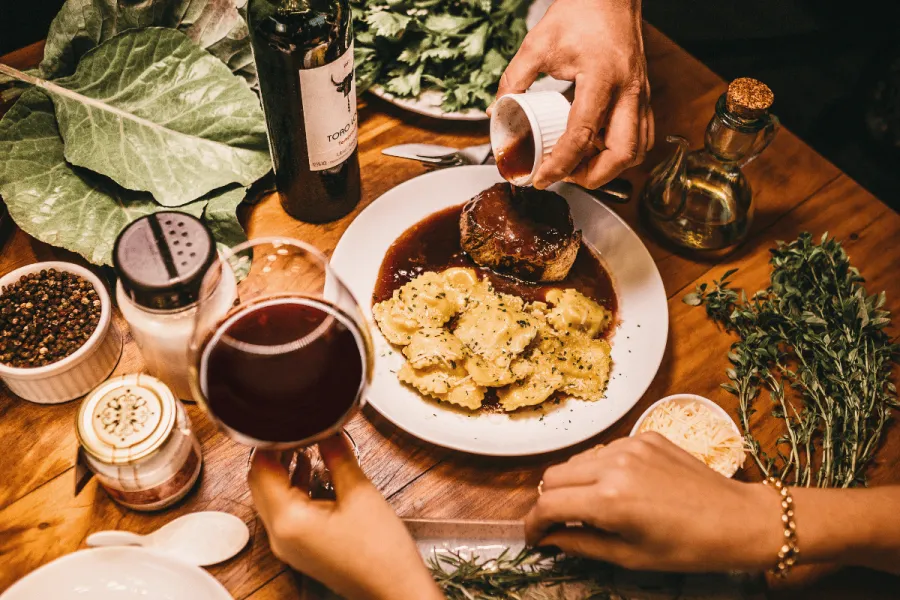
Beef is traditionally paired with tannic red wines because the protein and fat in the meat soften the wine's tannins, so the wine tastes smoother and the meat more flavorful. A steak tastes much better in the company of a full-bodied red.
Salt makes wine taste better. That's why wine and salty cheese is such a great match.
Guide to food paired with wine
Guide to the best wines with Indian food
Discover the perfect wine with dessert pairing for every occasion
Creating budget friendly food and wine combinations