
Holiday meals are special occasions which usually call for a festive bottle of wine.
Traditional holiday meals often feature ham or turkey, and both can cause some debate, and confusion, about which wine to serve.
Pairing wine with these two dishes can be a little tricky, so let's break them down and see which wines work best.
Ham, glazed or smoked
Many holiday hams are glazed with a sweet sauce that forms a sticky, caramelized crust. Others are smoky and salty, the kind that are cured and aged. Sweet, salty glazed ham goes best with a fruity white wine with good acidity and a touch of sweetness, such as an off-dry Riesling or Gewürztraminer, or with a rosé. A fruity, low-tannin red such as Pinot Noir, Beaujolais or Zinfandel also works well, especially with smoky ham, and Vouvray, made from Chenin Blanc, is another good match.
These pairings work because they balance the meal. The acidity of the Riesling cuts through the sweetness of the glaze, while the fruitiness of Pinot Noir complements the smoky, salty flavor of cured ham. Big, tannic, high-alcohol wines tend to clash with salty ham and overpower it.
Turkey, white or dark
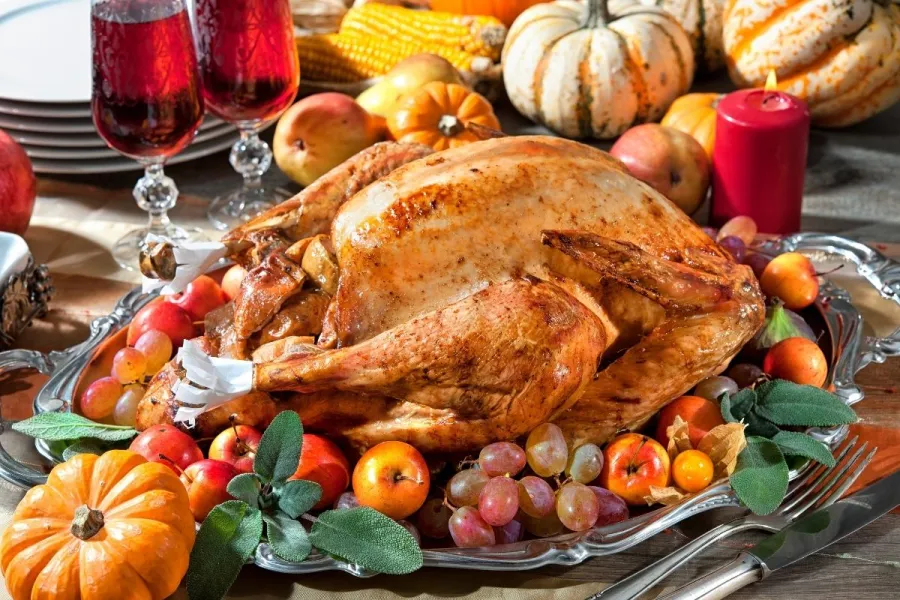
Turkey and stuffing pair well with a white wine with some acidity, such as Sauvignon Blanc or Pinot Gris, or a richer Chardonnay. If you prefer red, choose a light-bodied, fruity one such as Pinot Noir, Beaujolais or Zinfandel, which go well with both the white and dark meat and with cranberry sauce.
Lean white meat can seem dry, so a wine with bright acidity or a hint of sweetness, such as an off-dry German Riesling, refreshes the palate and makes each bite taste juicier.
If you want a wine that will please everyone at the table, try a sparkling wine or Champagne.
For the side dishes, gravy goes well with red wines like Merlot. Mashed potatoes suit buttery Chardonnay or Viognier, and green beans are tasty with Sauvignon Blanc or a Finger Lakes Riesling. And pumpkin pie? Try an off-dry Riesling or Moscato d'Asti.