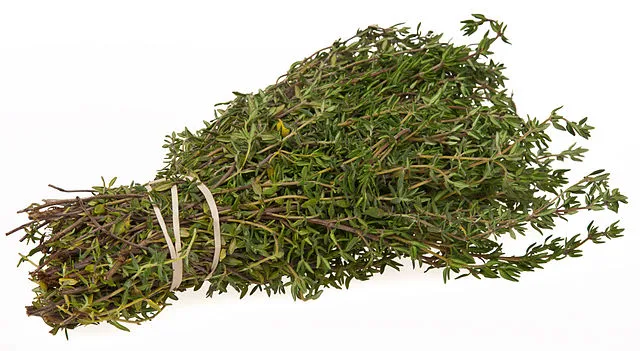
This fragrant herb was a symbol of courage in ancient Greece, burned as incense by the Romans and used as an antiseptic in the Middle Ages, and thyme tea is still a traditional remedy for a sore throat. Its intense aroma stimulates the appetite. Thyme is one of the herbs in a classic bouquet garni, used to flavor broths, stocks and countless dishes.
How to identify thyme
Thyme is a small shrub with woody stems, tiny gray-green leaves and small pale pink to light purple flowers. It grows 6 to 12 inches (15 to 30 cm) tall.
Common, or garden, thyme is the type most used in cooking. Lemon thyme, with its tangy citrus aroma, is also popular.
How to use and store thyme
Thyme leaves, the part most used, are sold fresh, in sprigs, or dried. Dried thyme can be strong, so use it carefully. Thyme also freezes well. The leaves are tiny, so there is no need to chop them; just strip them off the stems.
Thyme is widely used in Western cooking, especially around the Mediterranean. Its pungent, intensely aromatic flavor adds depth to soups, marinades, stuffings, vegetable, fish and cheese dishes and all kinds of meat and poultry, and it is especially good with game.
Thyme stands up to long, slow cooking extremely well, so it is ideal in casseroles, slow cooker stews and bean dishes. A sprig of thyme is one of the components of the basic bouquet garni, and it joins parsley and orange peel in Provençal beef daube, a casserole of beef stewed with red wine and black olives.
Thyme also delicately flavors oils, vinegars and breads.
Cooking with thyme
Thyme is especially good in dishes that simmer for a long time and in tomato sauces for meat. It adds warmth and flavor to all kinds of meat, as in this thyme-flavored braised veal, or try any of the recipes with thyme.
Try this: Fry 10 cloves of slivered garlic in 4 tablespoons olive oil, then add 1 more clove of garlic, crushed, the leaves from 1 sprig of parsley, finely chopped, 1 teaspoon thyme leaves and 6 crushed peppercorns. Stir a couple of times, add the juice of 1 lemon, stir well and pour this sauce, still hot, over small pieces of fried chicken.
Thyme substitutions: if your recipe calls for thyme and you don't have it, replace 1 teaspoon fresh thyme leaves with:
- 1/2 teaspoon dried thyme
- 1 teaspoon chopped fresh marjoram
- 1 teaspoon chopped fresh oregano
- 1 teaspoon chopped fresh basil
- 1 teaspoon chopped fresh summer savory
- 1/2 teaspoon chopped fresh rosemary
- 1/2 teaspoon chopped fresh sage
- 1/2 teaspoon Italian seasoning, usually a mix of thyme, oregano and basil
- 1/2 teaspoon poultry seasoning, usually a mix of dried thyme, sage and marjoram
- 3/4 teaspoon herbes de Provence, usually a mix of thyme, savory, marjoram, rosemary and sometimes lavender
- 1/4 teaspoon ajwain, an Indian spice with a strong thyme-like flavor
Experiment
Add a warm, pungent flavor to any dish with crumbled thyme leaves, use thyme sprigs as a garnish, or blend thyme with other herbs. Lemon thyme adds a lemony note too.
Cooks have been experimenting with thyme for hundreds of years, so you know there are many ways to use it. A few extra tips:
- Add a few thyme leaves to roast chicken about 20 minutes before it is done.
- Add a Mediterranean touch to fish soup with a little thyme.
- Mix ground thyme, salt and pepper and rub it onto veal or pork before roasting.
- Add chopped thyme leaves to melted butter and use it as a sauce for boiled or steamed seafood.
- For a subtle aroma, add a sprig of thyme or basil to tomato juice and chill. Remove the sprig before serving.