Sage is the favorite herb for poultry stuffing and a great addition to any roast or flavored butter, but use it with a light hand, as it can easily overpower other flavors.
The Romans grew sage for its medicinal qualities, and it has long been used in folk remedies, including teas for sore throats and to aid digestion.
How to identify sage
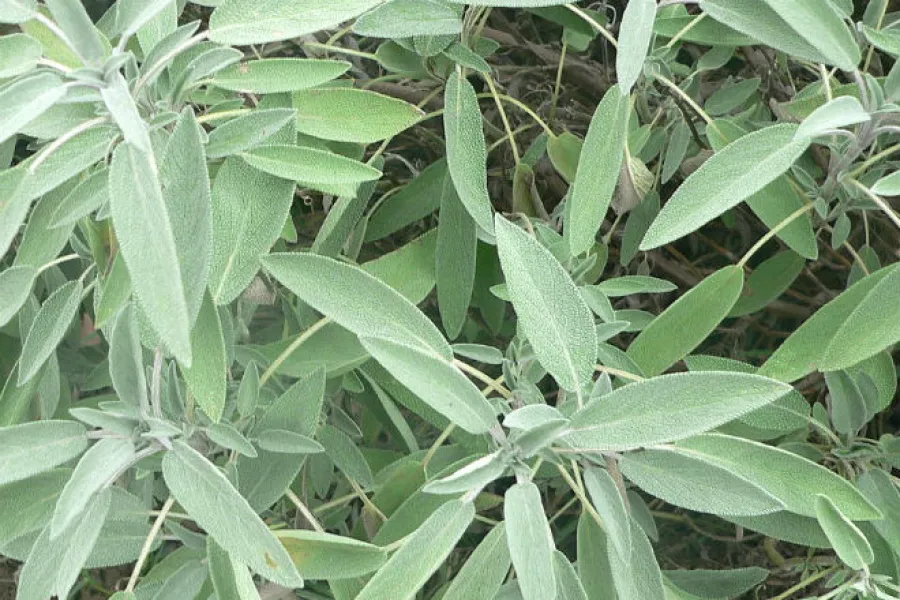
Sage is a small evergreen shrub with soft, velvety, gray-green, strongly aromatic leaves and spikes of purple-blue flowers. It grows wild in Mediterranean countries.
How to use and store sage
Sage is used in stuffings, with veal, chicken, turkey and pork, and to flavor butter and cream. It is often added to chicken or pork stews and to sausages. It also flavors some cheeses, such as English Sage Derby.
Like most herbs, sage is best fresh, though it freezes well and dried, rubbed sage is a classic in American Thanksgiving stuffing.
How to grow sage
Sage is easily grown from summer cuttings or from seed. It likes sun and well-drained soil, needs only moderate watering and does best sheltered from strong winds. Trim it in spring to keep it bushy.
Cooking with sage
There are a thousand ways to use sage in cooking. It is ideal for quick meat dishes, like veal or chicken scaloppine and saltimbocca, and for flavoring melted butter to dress fresh or stuffed pasta.
Tagliatelle with sage butter
Cook 3/4 pound tagliatelle in boiling salted water. Meanwhile, melt 3 to 4 tablespoons butter in a pan, add 10 sage leaves and cook gently until the butter turns hazelnut brown and the leaves are crisp. Drain the pasta and toss with the sage butter. Sprinkle with grated Parmesan cheese and serve.
Experiment
Sage and onion is the traditional British stuffing for duck, goose and pork. Use it with other meats too, like chicken, turkey and lamb.