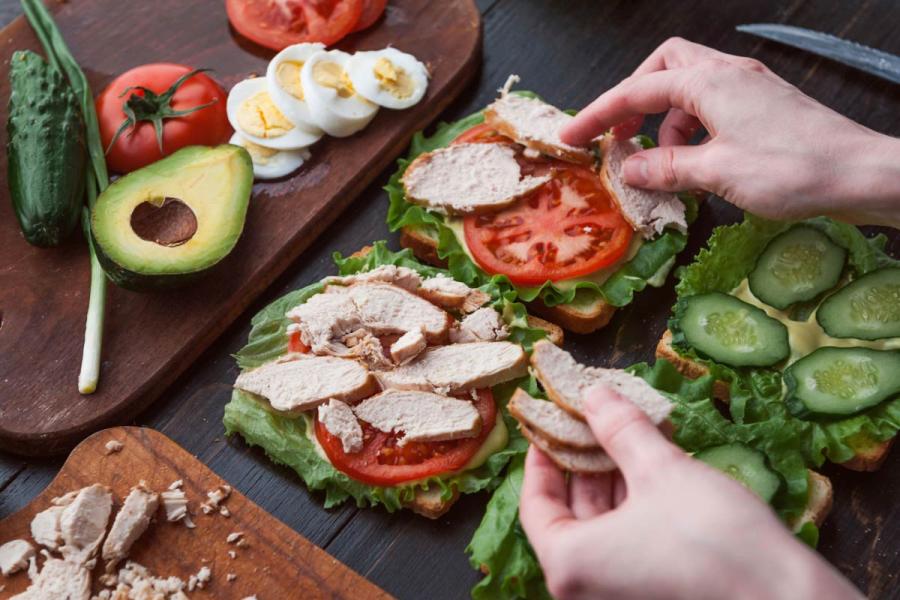
Sandwich making
Perfectly balanced snack or a whole meal, sandwiches are quick to prepare, quick and easy to eat and perfect for the lunch box.
Perfectly balanced snack or a whole meal, sandwiches are quick to prepare, easy to eat, and perfect for the lunch box.
Sandwiches have come a long way since 1762, when John Montague, Earl of Sandwich, reputedly asked a servant to bring him some meat between two slices of bread so that he could eat without having to leave the gaming table. Hot or cold, sweet or savory, there is a sandwich to suit every occasion and every taste. With the variety of breads available today, it is easy to make the perfect sandwich to suit your mood.
Choosing your bread
The bread is not a neutral container — it is half the sandwich. A filling that works beautifully in a soft white roll will be overwhelmed inside a dense rye loaf, and a delicate filling like egg or smoked salmon needs gentle bread to let it speak.
- Soft sandwich bread — white or wholemeal, sliced. The most versatile. Good with almost any filling, and the right choice whenever you want the filling to be the focus.
- Sourdough and country loaves — robust enough for hearty fillings like roast meat, strong cheese, or anything with a lot of moisture. Toast it first if the filling is very wet.
- Baguette and crusty rolls — ideal for cold cuts, cheese, and salad. The crust provides structure. Less suitable for delicate fillings or anything that needs to be eaten tidily.
- Rye and dark breads — natural partners for smoked fish, pickled herring, cream cheese, and cured meats. The earthiness and slight sourness work well with strong flavors.
- Ciabatta and focaccia — good for grilled and pressed sandwiches. Their open crumb absorbs flavors well when toasted.
- Pittas and flatbreads — pocket breads that hold fillings without spilling. Good for falafel, grilled meats, and anything saucy.
- Tortillas and wraps — flexible and portable. Best with fillings that have some texture to grip against the bread; very wet fillings make them soggy quickly.
- Bagels and brioche rolls — richer and sweeter. Bagels suit smoked salmon, cream cheese, and cured meats; brioche works well with fried chicken, pulled pork, and anything that benefits from a little sweetness in the bread.
As a general rule: the stronger the filling, the more robust the bread can be. The more delicate the filling, the softer and more neutral the bread should be.
The spread
Every sandwich needs a spread, even if only a thin one. Beyond flavor, spreads do two practical jobs: they prevent the bread from drying out, and they create a moisture barrier that keeps wet fillings from making the bread soggy. Dry bread on one side, damp bread on the other, is the most common sandwich failure — and it is almost always a spreading problem.
- Butter — the classic. Neutral enough to work with almost anything. Take it out of the fridge 20–30 minutes before spreading so it goes on evenly without tearing the bread.
- Mayonnaise — richer and more flavorful than butter. Good with chicken, tuna, egg, prawns, and BLTs. Mix with a little Dijon mustard or lemon juice to sharpen it.
- Mustard — adds sharpness and heat. Whole grain mustard works well with ham, roast beef, and cheese; Dijon with cold cuts and grilled meats; American yellow mustard with hot dogs and deli sandwiches.
- Cream cheese — soft, rich, and mild. Good with smoked salmon, cucumber, roasted vegetables, and anything that needs a creamy element without heaviness.
- Hummus — a good base for vegetable and falafel sandwiches. Also works as a spread under roasted or grilled chicken.
- Pesto — strong flavor, so use sparingly. Best with mozzarella, tomato, grilled vegetables, or as a secondary spread alongside butter or mayo.
- Aioli — garlic mayonnaise. Good with grilled fish, fried chicken, and Mediterranean-style sandwiches.
Spread all the way to the edges — not just the middle. Edges left bare dry out quickly and taste of nothing.
The basics of sandwich making
Spreading butter, mayonnaise, or cream cheese creates a protective barrier against moist toppings and fillings, preventing the sandwich from getting soggy. Spread the butter and filling right to the edges of the bread so every bite is evenly covered.
Use crisp vegetables — like celery or Chinese leaves — instead of the traditional salad leaves on sandwiches made well in advance. By wrapping them in cling film or foil to prevent drying, and storing them in the refrigerator, you can keep sandwiches fresh-looking and appetizing for up to 24 hours.
Cut sandwiches in different shapes, with a sharp knife or cookie cutters, to make them more interesting. Roll them as pinwheels. Use different breads beyond the traditional loaf — pitta pockets, tortillas, rolls, croissants, and all sorts of buns all make excellent sandwiches.
Layering order
The order in which you build a sandwich affects both how it eats and how well it holds together. This is especially important for sandwiches that will be carried or eaten some time after making.
- Spread first — on both slices of bread, all the way to the edges.
- Protein next — sliced meat, fish, or a patty goes directly on the spread. The fat in the spread helps it adhere and adds flavor.
- Cheese on the protein — sitting against the meat rather than against the bread keeps it from making the bread greasy.
- Firm vegetables in the middle — tomato, cucumber, roasted peppers. These are the wettest components; keeping them away from the bread slows sogginess.
- Something acidic — pickles, sliced gherkins, pickled onions, or a smear of mustard. Acid balances richness and lifts the whole sandwich. This is the element most often forgotten and most often missed.
- Leaves on top — lettuce, rocket, or spinach go on last, directly against the top slice of bread. They act as a secondary moisture barrier.
For very tall sandwiches, press down gently before cutting — this compacts the layers and makes the sandwich easier to eat without everything sliding out.
Hot sandwiches
Hot sandwiches follow the same principles as cold ones, but heat changes the dynamics. Cheese melts and binds. Bread crisps and seals. Flavors intensify. A sandwich you would never consider eating cold can become something extraordinary when grilled.
Toasting
Toast the bread first, then assemble — this keeps the crumb crisp against wet fillings. Good for open sandwiches and anything with a lot of sauce.
Grilling
Assemble the sandwich first, then cook it in a pan or on a griddle with a little butter. Press down firmly and cook over a medium heat — too high and the bread burns before the filling heats through. A classic grilled cheese needs 3–4 minutes per side over medium heat. Covering the pan briefly with a lid helps the cheese melt without overcooking the bread.
Pressing (panini)
A sandwich press or panini grill applies heat and pressure simultaneously, compressing the layers and creating a crisp, sealed exterior. Use ciabatta, focaccia, or a sturdy roll — soft bread collapses under the pressure. Brush the outside of the bread with olive oil or butter before pressing for better color and flavor. Most panini are ready in 3–5 minutes.
Oven-baked
For larger quantities — a tray of club sandwiches or open-face melts — the oven is more practical than a pan. Bake at 375°F (190°C) for 8–12 minutes, or until the cheese is bubbling and the bread is golden at the edges.
Common mistakes
- Too much filling — a sandwich that cannot be eaten without everything falling out is frustrating, not generous. If the filling is thicker than the bread, reconsider.
- Wrong bread for the filling — a delicate filling in bread that is too dense, or a wet filling in bread that is too soft, will disappoint regardless of ingredient quality.
- Forgetting something acidic — pickles, mustard, a squeeze of lemon, or vinegar-dressed leaves cut through fat and salt and make a sandwich taste finished. Without acid, even a good sandwich can taste flat.
- Skipping the spread — dry bread makes for a dull sandwich and goes stale faster. Even a thin layer of butter makes a significant difference.
- Assembling too far ahead — most sandwiches are best made close to eating. If making ahead, keep wet elements (tomato, dressed leaves) separate until the last moment.
- Cutting with a blunt knife — a blunt knife drags and compresses rather than cuts, ruining the layers you have carefully built. A serrated knife is best for most sandwiches.
Sandwiches around the world
The idea of filling between bread is universal, but what goes inside — and what counts as bread — varies enormously from country to country. Every culture has its own version, shaped by local ingredients and eating habits.
- Croque monsieur (France) — a toasted ham and Gruyère sandwich with béchamel sauce, grilled until golden. Top it with a fried egg and it becomes a croque madame. The definitive hot sandwich of the French café.
- Smørrebrød (Denmark) — open-faced rye bread topped with combinations of pickled herring, smoked salmon, roast beef, or liver pâté, finished with garnishes like capers, onion rings, or dill. Eaten with a knife and fork. The toppings are as much about visual arrangement as flavor.
- Bánh mì (Vietnam) — a French baguette filled with a combination of pork or chicken, pâté, pickled daikon and carrot, cucumber, fresh coriander, chili, and mayonnaise or butter. The result of French colonial influence on Vietnamese street food, and one of the great sandwiches of the world.
- Torta (Mexico) — a soft roll (telera or bolillo) filled with beans, avocado, jalapeño, and a choice of meat, often with crema and cheese. Served hot or cold. Tortería stalls are a fixture of Mexican cities, where the torta is everyday lunch food.
- Bocadillo (Spain) — a simple baguette-style roll filled with jamón, chorizo, tortilla española, or cheese. Often rubbed with tomato and drizzled with olive oil before filling. Straightforward, honest, and often excellent.
- Tramezzino (Italy) — a soft, crustless white sandwich, cut into triangles, filled with tuna and olive, prosciutto and artichoke, or egg and anchovy. A fixture of Venetian bacari and Italian bars, eaten standing up with a glass of wine or an aperitivo.
- Pan bagnat (France, Nice) — a round roll soaked with olive oil and filled with salade niçoise ingredients: tuna, hard-boiled egg, anchovy, tomato, olives, and basil. Made in advance and pressed under a weight so the oil and juices soak into the bread. Gets better the longer it sits.
- Reuben (United States) — corned beef, Swiss cheese, sauerkraut, and Russian dressing, grilled on rye bread. An American deli classic with disputed origins in either New York or Omaha, depending on who you ask.
- Choripán (Argentina) — grilled chorizo in a crusty roll, served with chimichurri. Street food at its most direct. Common at markets, football grounds, and roadside grills across Argentina and Uruguay.
- Katsu sando (Japan) — a breaded and fried pork or chicken cutlet (tonkatsu), topped with shredded cabbage and tonkatsu sauce, between slices of soft white milk bread (shokupan), crusts removed. Precise, satisfying, and increasingly popular well beyond Japan.