The vintage that arrived too soon
How heat is changing Champagne (and the world)
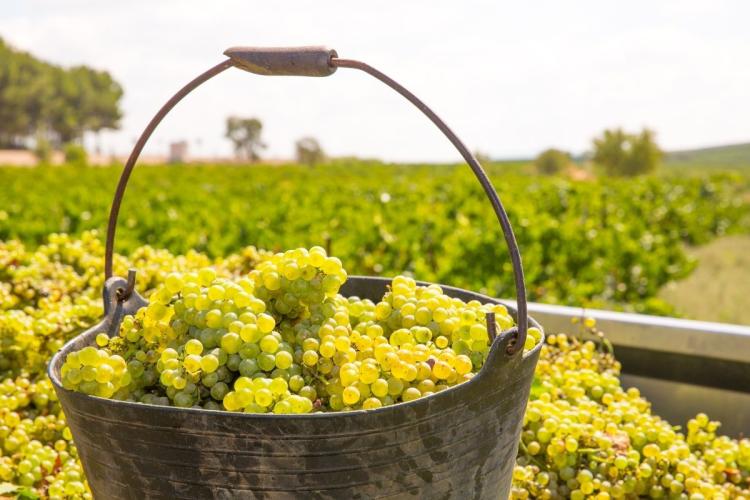
In Champagne, the middle of August used to be for holidays. Growers closed the gate, went to the coast, and came back at the start of September to pick. In 2026, the pickers were already in the vineyards while the rest of France was still on the beach.
The region opened its earliest harvest on record. The official start dates ran from 8 to 22 August depending on the village and the grape variety, with Montgueux first out on 8 August, Ambonnay on 10 August, Cumières on 13 August, and the famous Côte des Blancs grand crus of Avize, Chouilly, Cramant and Le Mesnil-sur-Oger on 14 August. Bollinger began picking on 13 August, just 76 days after the vines flowered.
To see how far outside the normal that sits, look at the record book. The earliest official start before this year was 2020, on 17 August. Before that, 2003, on 18 August, which was itself the first August harvest since 1822. A handful of other hot years crept into August too: 2007, 2011, 2018 and 2025, all of them around the 19th or 20th. What used to be the extreme has become the new baseline, and 2026 pushed past even that.
It would be easy to file this under "hot summer, early vintage" and move on. But something more interesting is happening, and it changes what ends up in your glass. The grapes are not simply arriving early. They are arriving unevenly, ripening in one way and not another, and forcing growers to decide what "ripe" even means.
What actually happened in Champagne this year
The 2026 growing season in Champagne was not one weather event. It was a sequence of them, and they pulled in opposite directions.
A mild late winter pushed the vines into growth early. Then, in late March, frost arrived after the buds had already opened. Three separate frost episodes destroyed roughly 40% of the early buds across the region on average, with damage ranging from about 25% in the luckiest sectors to as much as 85% in the northern Aisne. That is the kind of loss a grower does not recover from within the season. Whatever survived was the crop.
Then came the heat. Four heatwaves rolled through, with temperatures touching 40°C in parts of Champagne in June, followed by drought. Sugar accumulated fast. By 10 August the average potential alcohol across the region had already reached 10.1%, and it was climbing at about 0.27% per day. In practical terms, waiting a week would have cost nearly two percentage points of alcohol.
The fruit itself was small. Average cluster weight stayed below 100 grams, and in parts of the Vallée de la Marne below 90 grams. Small berries concentrate flavor, which sounds like good news, and the grapes were notably healthy because dry weather keeps fungal disease down. But small berries and 40% fewer of them add up to a very short crop.
The industry had already braced for it. In July, the Comité Champagne set the marketable yield for 2026 at 8,800 kg per hectare, roughly 250 million bottles. That is the fourth consecutive annual reduction, down from 11,400 kg/ha in 2023, and the lowest figure in modern memory apart from the pandemic-affected 2020. The decision was about markets as much as weather: shipments through the end of June 2026 stood at 107.1 million bottles, up a modest 1.2%, with export doing the work while the French domestic market slipped.
So the picture is a small, healthy, very early crop arriving into a cautious market. That is unusual enough. What makes it a genuine turning point is the decision growers had to make in the vineyard.
Why "ripe" stopped being a single number
This is the part worth understanding, because it explains more about modern wine than any vintage chart.
A grape ripens along three tracks at once. Sugar climbs, which eventually becomes alcohol. Acidity falls, which determines whether the wine tastes fresh or flabby. And phenolic ripeness develops, the slower business of flavor compounds, aromatics, tannin in the skins and seeds, and everything that makes a wine taste like fruit rather than like sweetened water.
For most of the history of northern European wine, those three tracks arrived at roughly the same time, or close enough. The grower's job was to wait for sugar, because sugar was the limiting factor. Getting grapes ripe at all in Champagne was the challenge. Acidity took care of itself in a cool climate, and if the flavors were not fully developed, that was what blending and time in the cellar were for.
Extreme heat breaks that alignment. Sugar responds very quickly to hot weather, and drought speeds it further by shrinking the berries and concentrating everything inside them. Acidity, particularly malic acid, burns off fast in high temperatures, especially during warm nights when the vine has no chance to recover. Phenolic ripeness, though, moves at its own pace, and heat stress can actually stall it. A vine under real water and heat stress partly shuts down.
The result is a grape that is technically ripe by the sugar reading and not yet ripe by taste. Picking on sugar alone gives you a wine that is high in alcohol, low in acid, and oddly hollow in the middle. Waiting for flavor risks losing the acidity that gives sparkling wine its backbone entirely.
Champagne critic Richard Juhlin summed up the shift neatly this year: in hot vintages, the challenge in Champagne is no longer reaching enough alcohol, it is protecting the acidity that gives the wines their nerve.
That is a complete inversion of the region's founding problem. Champagne exists as a style because northern France struggled to ripen grapes. The whole apparatus of the region, the blending across villages and years, the reserve wines, the second fermentation, was built around scarcity of ripeness. In 2026, ripeness was the easy part.
It is not just Champagne
The same story played out across the northern hemisphere, with local variations.
Burgundy broke a record that had stood for nearly five centuries. Pickers were working the Montrachet grand cru vineyard on 13 August, making 2026 the earliest harvest in the region's recorded history.
Bordeaux came in historically early, particularly for Crémant and certain white plots, though not the earliest ever recorded there. The region also had wildfires nearby, which were contained without damage to the vineyards.
Spain saw its biggest advance on record. Picking began more than 20 days ahead of normal in Castilla-La Mancha, Rioja, Extremadura and Andalucía, and in some areas started in July. In Catalonia, the Penedès sparkling houses moved first: Gramona picked on 22 July, its earliest documented start, and Juvé y Camps ran the earliest harvest in more than a century of trading, working at night for the first time in its history. The Canary Islands, which always open the northern hemisphere season, were picking Malvasía Volcánica in early July.
Italy ran roughly ten days ahead across the board. Sicily started on 21 July around Trapani. Alto Adige recorded the earliest start in its history, which the local consortium linked to an unusually warm March and April that set the whole season running fast. Piedmont's Langhe came in seven to ten days early, and Veneto eight to ten.
California was arguably the most dramatic. Chandon in Napa called its earliest first pick in the winery's 53-year history on 24 July, beating its previous record of 3 August set in 2021. In Santa Barbara County some fruit came off as early as 30 June. At Talley Vineyards in the Edna Valley, grapes came in six weeks ahead of the normal schedule.
The 3 a.m. harvest
There is a human story underneath the dates, and it rarely makes the tasting notes.
Picking in a heatwave means picking at night. In Spain this year, crews went into the vineyards at three in the morning wearing headlamps. It is not for comfort. Grapes picked cold arrive at the winery cold, which slows oxidation and holds onto the aromatic compounds that heat strips away. Laura Tragant, technical director at Juvé y Camps, explained that harvesting at those hours keeps the fruit much colder, with less oxidation and better aroma retention.
Night picking also means new equipment, night-shift labor law, lighting, and crews working in the dark on slopes. Add the scheduling problem: when everything ripens at once and the picking window compresses from three weeks to one, a winery needs its full crew, its press, its tanks and its cellar space all ready at the same moment, weeks earlier than the contracts used to say. Italian growers reported real difficulty finding skilled harvest labor this year, and an early, compressed harvest makes that worse rather than better.
And the economics are not keeping pace. In Spain, the earliest harvest in history arrived alongside grape prices below the cost of picking. Growers in Rioja calculated that producing a kilo of red grapes cost between €1.35 and €1.38 in 2025, while the average sale price sat at €0.80.
Heat is only half of it
Here is where the simple version of this story falls apart, and the more accurate version is more unsettling.
What growers are dealing with is not steady warming they can plan around. It is volatility. Champagne's 2026 was defined as much by the March frost as by the June heat, and the frost only did that much damage because the warm winter had pushed the buds open early. Warmth created the vulnerability, then cold exploited it.
Australia has been living the same pattern. Recent vintages there have brought frost, fire and flood inside a single harvest, and the 2026 crush came in at 1.27 million tonnes, down 19% on the year and about 25% below the ten-year average. Meanwhile South Australia, after a freakishly hot, dry and early 2025, turned around and delivered a late, moderate 2026. The direction of travel is warmer. The year-to-year experience is a coin toss.
That matters for anyone buying wine, because it means vintage variation is getting wider, not narrower. Two consecutive years from the same producer can now taste like they came from different countries.
The other side of the map
Every degree that makes Champagne harder makes somewhere else possible.
England is the clearest case. It has warmed enough to ripen the classic Champagne varieties reliably, and southern England now produces sparkling wine that competes seriously on quality. Some French producers who depend on acidity have started investing in English vineyards outright, which tells you how the industry reads the trend.
Further north, the change is faster than most people realize. Denmark has gone from around eight commercial vineyards in 2000 to roughly 90 today, with its own appellation since 2018. Sweden had two commercial vineyards fifteen years ago and now has closer to 40, concentrated in Skåne. Most of these work with cold-hardy hybrid grapes like Solaris and Rondo rather than the classic international varieties, and the output is overwhelmingly white and sparkling.
It is tempting to read this as a happy ending, a simple relocation northward. It is not. A vineyard is not portable. Champagne's chalk, which held enough water this year to protect the vines from real drought stress, does not exist in Denmark. Nor do the two centuries of accumulated knowledge about which parcel ripens when. What is happening is displacement, and displacement always costs more than it looks like from a distance. Elevation is becoming as important as latitude, which is why high-altitude sites in Argentina, Switzerland and elsewhere are drawing attention they never used to get.
Worth remembering that hot climates produced great wines long before anyone worried about warming. Port, Madeira, Sherry and Marsala were built for heat and for long sea voyages, in places where high sugar and low acid were the starting conditions rather than a problem to solve. Champagne was built for the opposite. That is why one region is adapting and the other simply carries on.
What this means in your glass
You do not need to follow harvest dates to notice the effect. Some of it is already on the shelf.
- Alcohol is creeping up. A wine that would have been 12% two decades ago is often 13.5% or more now, from the same producer and the same vineyard. Nothing changed in the cellar. The grapes arrived sweeter.
- Fresh styles have to be engineered rather than assumed. Earlier picking, night harvesting, higher-elevation and north-facing sites, and grape varieties that hold acid are all deliberate choices now. If a producer's wines still taste bright and precise in hot years, someone made hard decisions to get there.
- Non-vintage Champagne is doing quiet work. The whole point of blending across years and holding reserve wines is to smooth out exactly this kind of volatility. In wild vintages, non-vintage bottlings are often the more consistent buy.
- Drinking windows are shorter for many whites. Acidity is what carries a white wine through long aging. Lower acid means a wine that shows beautifully sooner and fades sooner. If you have been cellaring by habit, it is worth revisiting the assumption.
- Try the new places. English sparkling, and increasingly Danish and Swedish whites, are not novelty purchases anymore. They are what cool-climate wine looks like now that the old cool climates have warmed.
If you want a practical way to taste the change, open a bottle of Champagne alongside a good English sparkling wine from a recent vintage. Ten years ago the comparison would have been unfair. It no longer is, and the reason is written in the harvest calendar.
A vintage worth remembering
The 2026 Champagne harvest will end up in the history books twice: once for the record start date, and once as the year the region's central problem flipped from getting grapes ripe to keeping them fresh.
The wines themselves may well be very good. Growers across Europe reported healthy fruit, promising balance and real concentration this year, alongside painfully small volumes. A short, excellent vintage is not a tragedy for anyone drinking it. But the way this crop was produced, picked at 3 a.m. in mid-August by crews called in weeks early, from vines that lost 40% of their buds to a frost that only mattered because winter came warm, is worth paying attention to.
The bottle will still say Champagne. What is behind it is changing faster than the label lets on.