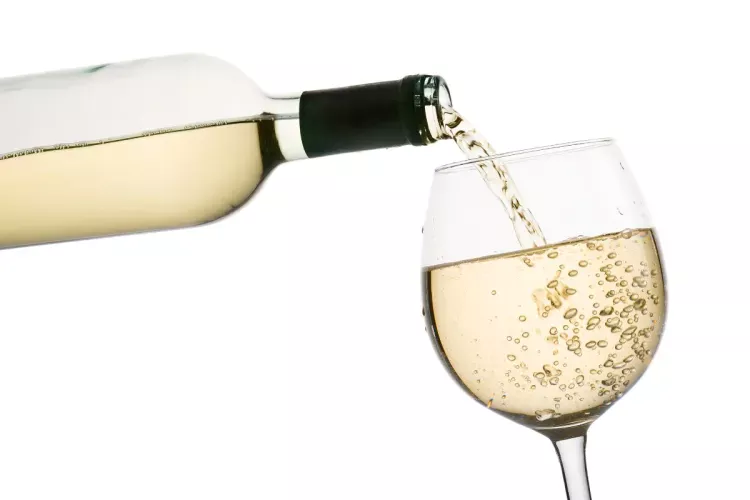
White wine styles, taste and how to drink it.
White wine is where most people’s love of wine begins — and it is far more varied than its pale color suggests. Under that one heading sits everything from a bone-dry, citrus-sharp Muscadet to a rich, buttery Chardonnay and a honeyed dessert wine. The thread running through all of them is freshness: bright acidity, lifted aromas and, usually, no tannin to get in the way. This page is about white wine as a style — what makes a wine white, the main styles to know, and how to serve and pair them. For the grapes themselves, our guide to white grape varieties is the companion read.
What makes a wine white
Almost all of a wine’s color and tannin come from the grape skins — and white wine is essentially the style that leaves the skins out. It is made mostly from white (green-skinned) grapes, though it can also be made from dark-skinned grapes if the clear juice is separated from the skins straight away. Either way, the juice ferments with little or no skin contact, which is exactly why white wine is pale, light on tannin, and built around fruit and acidity rather than grip. That one decision — skins out — is what separates it from rosé, orange wine and red, and it is worth understanding how a wine’s colour is decided in the cellar.
How white wine is made
The process is built to capture freshness. The grapes are pressed soon after picking and the juice is run off the skins quickly, then fermented on its own. Many whites are fermented cool and stainless steel to lock in their crisp, fruity character. Others are given more: time in oak barrels adds body and notes of vanilla, butter and toast, while resting on the spent yeast (the “lees”) lends a creamy, savory richness. Those choices — steel or oak, cool or warm, lees or none — are what turn the same grape into wildly different wines, which is why an unoaked Chablis and an oaked Californian Chardonnay can taste worlds apart.
The white wine spectrum: light to rich
The most useful way to navigate white wine is by weight and style rather than grape alone. Most bottles fall into one of four broad groups:
Light and crisp. High-acid, refreshing whites built for easy drinking — the zesty end of the scale.
Aromatic. Floral, perfumed wines that lead with scent and can run from bone-dry to gently sweet.
Full and rich. Rounder, weightier whites, often shaped by oak, with real body and texture.
Sweet and dessert. Lusciously sweet wines kept lively by acidity, for the end of the meal.
| Style | Typical grapes | What it tastes like | Try it with |
| Light & crisp | Pinot Grigio, Sauvignon Blanc, Albariño, Muscadet | Zesty citrus, green apple, high acidity, very refreshing | Oysters, salads, goat cheese, fried fish |
| Aromatic | Riesling, Gewürztraminer, Viognier, Torrontés | Floral and perfumed; peach and apricot; dry to off-dry | Spicy Asian food, charcuterie, aromatic dishes |
| Full & rich | Oaked Chardonnay, white Rhône blends | Creamy and rounded; stone fruit, butter, vanilla from oak | Roast chicken, creamy pasta, lobster |
| Sweet / dessert | Sauternes, late-harvest Riesling, Moscato | Honeyed and lush, concentrated, balanced by acidity | Blue cheese, fruit tart, or on its own |
Oak, sweetness and what you will taste
Three things shape how a white wine tastes. The first is oak: an oaked white feels rounder and creamier, with vanilla, butter and toast, while an unoaked one stays fresher and more fruit-driven — the single clearest lesson in our guide to old world vs new world wines. The second is sweetness: white wine runs from bone-dry to richly sweet, and “dry” simply means little or no sugar is left after fermentation. The third, and the backbone of nearly every white, is acidity — that mouth-watering freshness that makes white wine so easy to drink and so good with food. Typical flavors range across citrus, orchard and stone fruit, tropical fruit, white flowers and a mineral edge.
How to serve it
White wine is at its best chilled, but the right temperature depends on the style:
- Chill to match the weight. Light, crisp whites are best served well chilled; richer, oaked whites show more when only lightly chilled, closer to cellar temperature.
- Don’t over-chill. Ice-cold temperatures mute aromas and flavor. If a wine comes straight from a cold fridge, give it a few minutes in the glass.
- Drink most whites young. The majority are made to be enjoyed fresh, within a few years — though fine Riesling, white Burgundy and sweet wines can age beautifully.
White wine and food
The golden rule is to match weight with weight. Light, crisp whites are perfect with delicate dishes — oysters and shellfish, salads, goat’s cheese and fried fish — while richer, oaked whites can stand up to roast chicken, creamy pasta and lobster. Aromatic whites, with their hint of sweetness, are a classic foil for spicy food. And across the board, white wine’s acidity makes it a natural partner for anything you might reach for a squeeze of lemon to brighten. For more ideas, see our guide to food and wine pairing and notes on pairing wine and cheese.
The takeaway
White wine is the most versatile and approachable family of wine — a glass for every season, every dish and every level of experience. The best way to find your style is to taste across the spectrum, from the crispest to the richest, and notice where your taste settles. If you are just starting out, our guide to wines for beginners maps out a friendly first tasting, and the rest of the colors — rosé and orange wine — are well worth exploring once white feels like home.