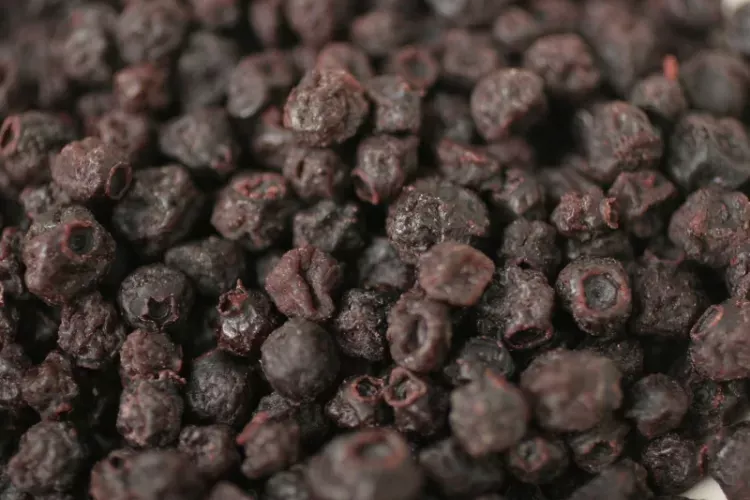
Much of our vitamin C comes from fruits and fruit juices. Learn how dried varieties of fruits are also good for our bodies.
Dried fruit has health advantages
We buy fresh fruits from the grocery store and the farmer's market as a part of a healthy diet. But fresh doesn’t stay fresh for as long as we’d like. One way to save that fruit is to dry it. Certain fruits can be dried for prolonged storage and still keep much of their goodness.
The drying process can be as easy as spreading thin slices of fruit on a baking sheet and leaving them in a very low oven, around 140°F to 170°F, for several hours, or using a food dehydrator. Once most of the water has been removed, dried fruit can be stored in an airtight container in a cool, dark place for months. Dried fruit also tastes much sweeter than regular fruit.
A piece of fruit is mostly water. The drying process concentrates the natural sugars and can feed our sweet tooth better than candy and other sweet foods. Also the vitamins and nutrients contained in the fruit are still present. Depending on the fruit, it contains folate, antioxidants, vitamin C, and vitamin A.
Dried fruit takes up less space than regular fruit and that is a good thing. You can get the same health benefits eating less. A cup of pineapple slices may contain four slices while a cup of dried pineapple slices may have twice as many. Since there is no water, it does not take up as much room. A small handful of raisins (1/4 cup) counts as a serving of fruit, just like a cup of grapes.
Dried fruit benefits our bodies with natural sugar instead of added sugar. Eating some fruit is much better than eating artificially flavored sweets. But, there is one drawback to dried varieties of fruit.
Like everything else, dried fruit is best eaten in moderation. While it is okay to eat a lot of real fruit, dried fruit contains more calories than regular fruit. Why is that, you may ask? Because it is concentrated, more fruit fits in a serving and the calories add up. Stick to the serving size, about 1/4 cup, to avoid too much sugar and too many calories, and look for dried fruit without added sugar.
Although a small box of dried fruits such as raisins is a very popular addition to the lunchbox, dried fruits don't have to be eaten alone. They can be added to cakes and pies, or breakfast cereals. The most widely used dried fruit is raisins. Raisins go well in cookies, cakes, and sweet breads.
Raisins provide potassium, iron and fiber, while dried apricots are a good source of vitamin A; most of the vitamin C, however, is lost in drying. As long as you don't eat too many dried fruits on a daily basis they are good for your health. It is just like anything else. Eating all things in moderation keeps them as healthy additions to your diet. Besides, dried fruits are easy to transport anywhere for a simple snack.