
Beer and health
For years, beer was pitched as wine's equal, or better, for your health. As with wine, that claim has not held up.
Here is what the evidence says now, so you can weigh it for yourself.
The health case for beer was always built on the back of the health case for wine. Red wine got the headlines, and then a run of studies suggested beer might do just as much good, or more, in moderation. But the two drinks were always making the same wager, because they share the same active ingredient — and it is that ingredient the science has turned against.
The case that was made for beer
The argument came in two parts. The first was simply that beer contains alcohol, and alcohol appeared to help: moderate drinkers were reported to have higher HDL (the "good" cholesterol), lower levels of the clotting protein fibrinogen, and lower rates of coronary heart disease. The second part was that beer brought something extra to the table. Studies pointed to its B vitamins and folate, to trace minerals such as magnesium and selenium, and to silicon, which some research linked to bone density; other reports suggested moderate beer drinkers scored better on cognitive tests in later life. Taken together, it made beer sound less like an indulgence than a tonic.
Why the case no longer holds
Two things have undermined it. The first is a flaw in how the studies were built. They compared drinkers against a group of "non-drinkers" that quietly included people who had stopped or cut down because they were already ill — the abstainer, or "sick-quitter," bias. This made abstainers look sicker and moderate drinkers look healthier than they really were. When a 2023 review in JAMA Network Open corrected for it across 107 studies and nearly 4.8 million people, the apparent survival benefit of moderate drinking disappeared. Genetic (Mendelian randomization) studies, which sidestep that bias, found no protective effect either. In 2025 the American Heart Association advised doctors to stop telling people to drink for their hearts.
The second is more specific to beer's "something extra" pitch. It is the alcohol that carries the risk, whatever the drink — and the modest amounts of B vitamins, minerals, or silicon in a glass of beer do not offset it. If you want folate, magnesium, or silicon, they are abundant in food, without the ethanol. A beer is not a multivitamin; it is an alcoholic drink that happens to contain traces of some nutrients.
The risks, with eyes open
Cancer. Alcohol is classified by the International Agency for Research on Cancer as a Group 1 carcinogen — the top category, alongside tobacco and asbestos — and is linked to at least seven cancers, including bowel and female breast cancer. The risk is dose-dependent and starts at low levels. The US Surgeon General's 2025 advisory estimated that alcohol causes around 100,000 cancer cases and 20,000 cancer deaths a year in the United States and called for cancer warning labels on alcoholic drinks. This applies to beer exactly as it does to wine and spirits.
Pregnancy. There is no known safe amount of alcohol during pregnancy. It can cross the placenta and, later, pass into breast milk; drinking during pregnancy can cause fetal alcohol spectrum disorders, with lifelong effects. This is the one point on which researchers have long been unanimous.
Liver and kidneys. Heavy, sustained drinking is a well-established cause of liver disease, including cirrhosis and hepatitis, and puts strain on the kidneys. Alcohol is a diuretic, so the old notion that beer "flushes" the system has it backwards.
Weight. Beer contains no fat, but alcohol and residual sugars carry calories with no nutritional return. A standard 12-ounce beer has roughly 150 calories, and craft, strong, or larger servings can hold much more. Over a week, that adds up.
Beyond these, the broader harms of heavy drinking — dependence, impaired driving, disrupted sleep — apply to beer as much as any other drink, simply because they come from the alcohol.
Is beer healthier than wine?
This was the question the page was originally built around, and the honest answer is that it mostly dissolves on inspection. From a health standpoint, ethanol is ethanol; the differences between beer, wine, and spirits are matters of flavour, strength, calories, and culture, not of health benefit. Choose between them for the pleasure of the thing, not because one is doing your heart a favour.
So where does that leave you?
None of this is a ruling on whether to have a beer with dinner. Beer is one of the oldest and most companionable drinks there is, tied up with food, friends, and the end of a long day. What has changed is the framing: the health halo that once sat on top of "a beer or two a day" has come off, leaving a genuine, personal trade-off between the pleasure and the risk.
That risk rises with how much and how often you drink, and it varies from person to person — anyone who is pregnant, has a family or personal history of cancer or liver disease, or takes medication that interacts with alcohol has more reason to be cautious. As always, don't take any single article as the last word, this one included. Read widely, weigh it against your own circumstances, and if it matters to your health, talk it over with your doctor. Then the choice is yours.
This article is general information, not medical advice.
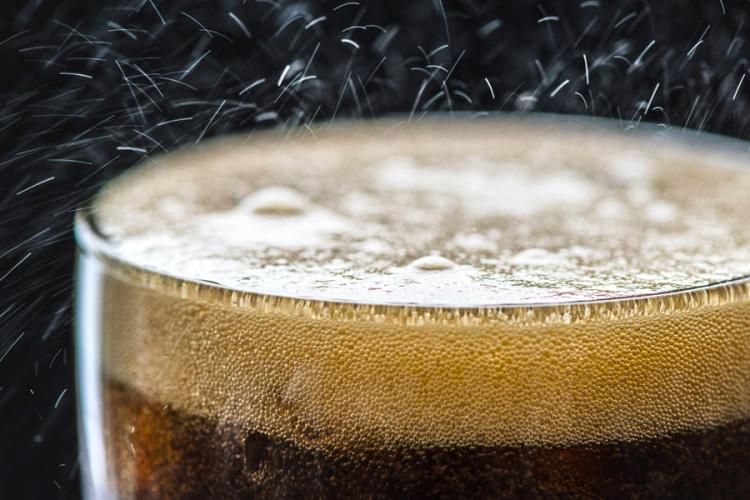
The health benefits of moderate wine drinking have been studied for decades — and, more recently, similar claims have been made for beer. But is it good science, or good marketing? As researchers have taken a harder look, the supposed benefits of moderate drinking have largely not held up, while the risks are well established. And since the harm comes from the alcohol itself, not the drink, asking whether beer is "healthier" than wine mostly misses the point. The more useful questions are different ones: what does the evidence actually show, and who has the most reason to be cautious?