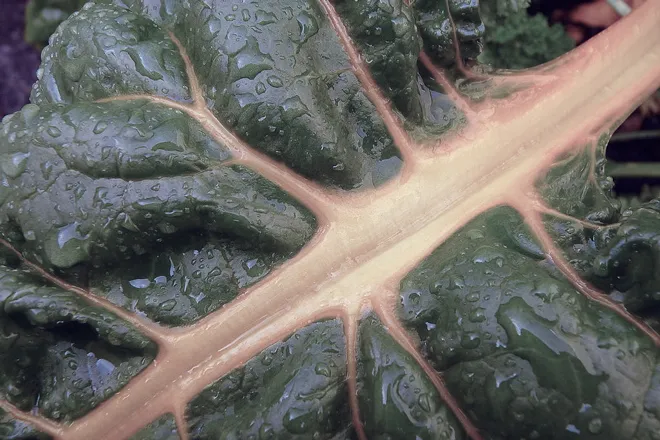
You may know chard by a number of different names, like Swiss chard, spinach beet, mangold, or silverbeet. But no matter what you call it, chard is a delicious and very nutritious green. It has a wealth of nutrients and over a dozen antioxidants, making it one of the best leafy vegetables for healthy diets. What is it?
Ancient Greeks and Romans used chard for medicinal purposes as early as the fourth century B.C. It is native to the Mediterranean region, found mostly in Italy, France, and Spain, but is now also grown in America.
The word "chard" actually comes from the Latin word carduus which means thistle. As this "carduus" was being heavily cultivated in France, the word evolved into the French word "carde" which in English evolved into "chard."
Another source indicates that the word "chard" was adopted by the French in order to distinguish it from a similar celery-like vegetable called cardoon. No matter what you call it, chard certainly has developed somewhat of an identity crisis.
The word Swiss was added to the word chard by 19th century seed catalogs to help distinguish this vegetable from the French spinach varieties.
Chard packs a nutritious punch in a colorful package
Chard is a cousin of the beet. In fact, it is the same species, but chard has been bred for its leaves and stalks rather than for a round root, so it doesn't form a bulb like beets.
The glossy green leaves often have red or white veins. The stalks of the chard plant can range in color between orange, white, red, and yellow. A variety of chard can sometimes be found packaged together as rainbow chard.
Preparation and cooking
Like many other leafy greens like kale and spinach, chard can be sautéed, grilled, roasted, or steamed as a side dish of its own or as an ingredient in casseroles mixed with rice, quinoa, or pasta. You can eat young leaves raw in salads; older leaves have a stronger, slightly bitter taste that is best mellowed by cooking.
Lots of Mediterranean dishes feature chard as part of the recipe. It can be used as ingredients for menestras, the Spanish vegetable casseroles. Stored unwashed in a plastic bag in the refrigerator, chard keeps for 3 to 5 days. One of the best ways to cook chard is to boil it in a similar way you would other greens, making a traditional Southern dish that has a long history in America. Another simple recipe is to sauté it quickly in a skillet and toss it with some lemon juice, olive oil, and garlic.
Vegetarians frequently use chard in recipes, and one healthy idea is to create a spicy vegetable tart pie using tofu, egg whites, mushrooms, and a crust made from various seeds and walnuts.
During the peak season for chard, stock up and try adding this green to soups, pasta, quiche and other baked vegetable and cheese dishes. The nutritional benefits are incredible and you'll be enjoying a time-honored member of the family of greens!