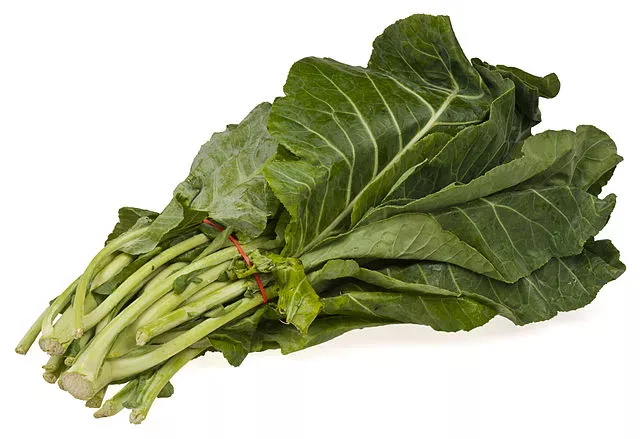
Collard greens have large, dark green leaves, similar to kale or spring greens, although they are a different vegetable.
When you think Southern cooking, you can't think too long before considering collard greens. This staple of the Southern diet has a long history and many fans who have perfected cooking their "collards" for generations. They are a staple of the American South. The smell of them is like coming home again. Collard greens are a good source of vitamins and minerals in the everyday diet. But, what makes this particular green so special? Let's take a little closer look at what makes these leafy greens unique.
All greens are not created equal
At any farmers market, you can find collard greens along with other varieties of greens most times of the year. Some people see kale or mustard greens and mistake them for collards. Mustard greens are usually lighter green, with frilly, peppery leaves. Curly kale has about the same coloring, but its leaves are curly. Collard leaves are flat, smooth and paddle-shaped, with a thick central stem sticking out from the bottom.
Trivia
Collards belong to the cabbage family and are biennial plants, although they can live longer in mild climates. The edible leaves have a slightly bitter taste, and are best when picked small and before they are fully mature.
Collard greens probably originated in the eastern Mediterranean, but they have found a home in America. A staple in the diet of enslaved people in the southern states, they have long been part of any special meal. Collard greens have a milder taste than mustard greens or kale and were served with fried portions of bacon and fatty meat.
Ancient Romans and Greeks grew and ate collard greens as early as the 4th century B.C. Europeans brought collards to the American colonies, but it was enslaved Africans who made them a Southern staple. They brought West African traditions of slow-cooking leafy greens with seasonings, grew collards and other greens in their own small garden plots, and made the most of whatever they were given, cooking greens with pig's feet or ham hocks for a much-needed, nourishing meal. The juice left from cooking greens, sometimes called pot likker, or pot liquor depending on your region, was also consumed.
As these recipes started to make their way out of the slave quarters and into the plantation kitchens, the recipes were expanded and shared in what now has become a solid Southern tradition of "soul food." But this leafy green is just as well known in Brazil, Portugal, and the Kashmir region and is so nourishing that it is considered a mainstay in these areas just as it is in America's South.
South Carolina, a major producer of collards, made collard greens its official state vegetable in 2011. Many people who enjoy soul food and the African American heritage that comes with it appreciate seeing this common green elevated to a higher status. The word "collards" is derived from the word "colewort" or "cabbage plant."
In the Southern states, when a family cooks up a big pot of greens of any variety, it is lovingly referred to as a "mess of greens." The actual distinction between a pot of greens and a mess of greens all depends on the size and tradition of the family. A New Year's tradition calls for the consumption of collards and black-eyed peas to bring good luck and a prosperous year. According to folklore, collard greens can do everything from curing headaches to warding off evil spirits.
Preparation and cooking
Before fixing them, please wash each leaf thoroughly. Collards grow on the ground like other greens. It is always possible that in being transported from the garden to the store, that a few travelers made the trip as well. Washing gets rid of all dirt and many legged travelers. My grandmother would soak the leaves in water with a drop of bleach, then rinse them several times. Today, food safety experts advise against using bleach or soap on produce: just swish the leaves in a sink of cold water, lift them out, and repeat with fresh water until no grit is left.
The leaves are then chopped or ripped up and boiled down in water and seasoned to taste. A long standing tradition was to boil them with smoked meats to enhance the flavor. They can also be fried in a skillet with smoked meats or bacon. On the healthier side, cooking them on the stove in a pot of chicken or vegetable broth still adds flavor.
Traditionally, collards are boiled or simmered with ham, pork, or bacon, or any salty or cured meat, and often served with cornbread to complete a true Southern-style dish. Often you'll find a jar of hot sauce or pepper sauce alongside for those who feel adventurous.
The greens make a great addition to brown rice, white rice, potatoes, pasta and quinoa. Using a flavored stock with these combinations will add a richness to the dish. Collards can also be sautéed with onions and oil or bacon grease. You may like to add a bit of brown sugar or even apple cider vinegar to kick up the flavor.
In Portugal, a popular soup called Caldo Verde (green broth) is served made with collards or kale along with potatoes and onions. This soup is often served during weddings and other celebrations.
Collards are an important part of American heritage, but also around the world, and the ancient civilizations that enjoyed them are a testament to their longevity in our culinary history. These simple greens have dressed-up tables and warmed-up bellies for generations of families who learned that cooking sometimes meant inventing delicious filling dishes from what we gathered, foraged, and cultivated.