
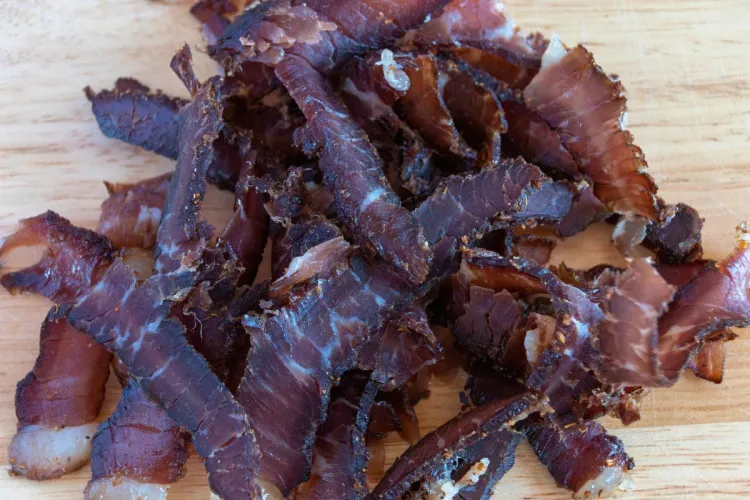
This biltong recipe honors the traditional method of meat preservation, resulting in a savory, spiced, and slightly tangy dried meat snack.
Ingredients
Instructions
Trim any excess fat off the meat and cut it into even strips, about 3/4 inch thick, following the grain.
Briefly dip the meat strips in the vinegar to coat them.
To make the curing mix, combine the salt, brown sugar, crushed coriander and black pepper.
Rub the curing mix thoroughly into each piece of meat.
Place the meat in a nonreactive container, cover and let it marinate in the refrigerator for 12 to 24 hours.
Pat the strips dry and hang them on hooks or a drying rack in a cool, dry, well-ventilated area, away from direct sunlight. A fan helps air circulation.
Let the meat dry for 3 days to 3 weeks, checking periodically, until it reaches the dryness you like.
Once dried to your preference, store the biltong in a cool, dry place, in a paper bag or cloth.
Nutrition627 estimated calories per serving
Notes
Serve biltong thinly sliced as a snack on its own, or as part of a charcuterie board with cheese, crackers and pickles.
Drying time depends on the thickness of the meat, the temperature and the humidity. Biltong is traditionally dried in cool, dry weather; in a warm or humid climate, use a biltong box or food dehydrator on its lowest setting.
Variations
Add other spices to the mix as desired, like ground cloves or freshly grated nutmeg. Some exotic spices, such as Indian ajwain, also go well with biltong.
Game biltong: Use game meat instead of beef for a wilder flavor.
Spicy biltong: Add chili flakes or cayenne pepper to the curing mix for a spicy kick.
Herb biltong: Add dried herbs such as thyme or oregano for a herby note.
Source
This recipe is a starting point, and making biltong is often a personal journey. Many South Africans have family recipes passed down through generations, each with its own twist.
Food in Africa
Last reviewed November 2026.