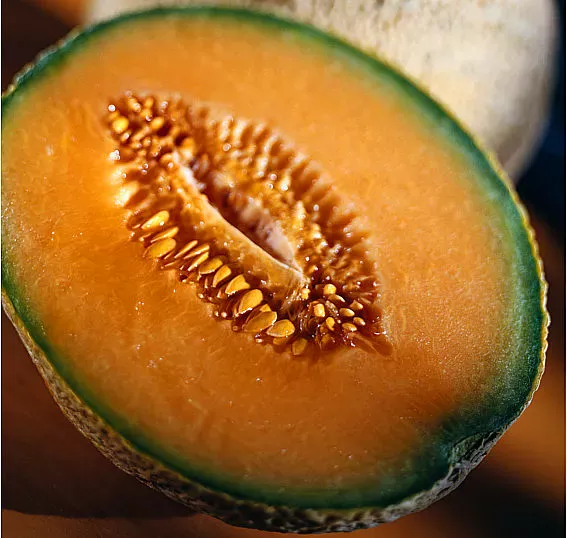
Cantaloupe melon offers more than sweet juicy refreshment. See what it is, trivia facts and history and how to eat this delicious fruit.
Juicy cantaloupe melon
Some say cantaloupe and some say muskmelon. Whatever you call this pungent, juicy fruit, the fact is this is one healthy food! Cantaloupe is the perfect snack for adults and kids, and adding this fruit to your diet has definite benefits, besides just being tasty.
What is it?
Cantaloupe belongs to the gourd family, which also includes squash, cucumbers, pumpkins and watermelon. In America, we know cantaloupe by its netted, beige rind. When you slice a cantaloupe in half, you'll find a pocket of seeds and soft threads. Scoop this out and you'll be ready to enjoy the sweet, juicy orange color flesh with its distinctive flavor and aroma.
Grown on vines, this fruit is ripe when the stem begins to separate easily from the cantaloupe itself. Because the aroma of the cantaloupe is so distinctive, many people say it is quite simple to tell if the fruit is ripe. If it smells ripe, it is ripe.
Health benefits
Like many healthy fruits, cantaloupes are rich in vitamin C, which supports the immune system. Cantaloupe is also high in beta-carotene, which the body turns into vitamin A, important for healthy eyes and skin.
Both are antioxidants that help limit the damage caused by free radicals. Cantaloupe also provides potassium, folate and other B vitamins, and it is about 90% water, so it's a hydrating, low-calorie snack.
How to eat
Most people enjoy fresh cantaloupe raw, on its own, savoring the juicy, rich texture and flavor as a snack or dessert. However, because cantaloupe is so flavorful and appealing, many find it a fun food to experiment with in order to serve in new ways. One interesting serving suggestion is to wrap cantaloupe chunks in thinly cut prosciutto slices for a tasty and eye-pleasing appetizer.
Cantaloupe also goes well with yogurt and mixed with other fruits in sweet salads. You can even make a cold soup by blending other fruits like apples, peaches, and strawberries with cantaloupe together in a cold puree. Cantaloupe also makes a great sweet bread with nuts and spices like ginger and cinnamon. Slushies and smoothies are another popular way to serve this tantalizing fruit.
Something to keep in mind is that cantaloupes have a short lifespan. Since the netted rind is so rough, it can harbor bacteria such as Salmonella and Listeria. For this reason, scrub cantaloupes with a clean produce brush under running water before cutting them open, and use a clean knife and cutting board. Refrigerate cut cantaloupe right away, don't leave it out for more than 2 hours, and eat it within three days.
The unmistakably sweet taste of ripe cantaloupe makes this one fruit that is easy to enjoy. For those of us with a sense of culinary adventure, there's a world of interesting recipes waiting for you to explore with this popular seasonal fruit.