
Pour-over coffee
A hands-on brewing experience.
Pour-over coffee represents the artisan approach to home brewing. This manual method involves slowly pouring hot water over coffee grounds in a controlled, circular motion, allowing gravity to extract the coffee's full potential. The result is a clean, bright cup that highlights the unique characteristics of your chosen beans.
Equipment needed for pour-over coffee
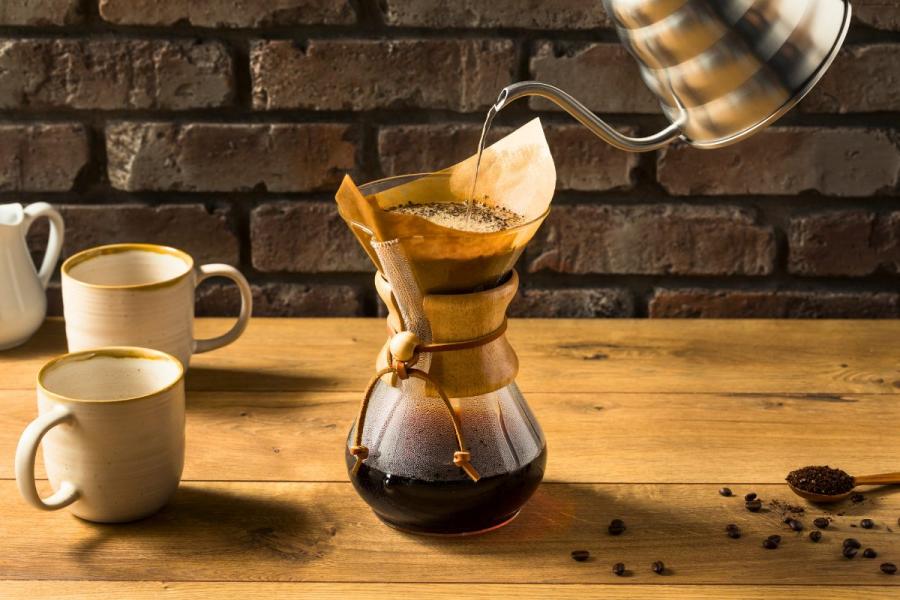
Creating exceptional pour over coffee requires minimal but specific equipment. Start with a dripper, popular options include the Hario V60, Chemex, or Kalita Wave. Each offers slightly different brewing characteristics, with the V60 providing the most control and the Chemex delivering the cleanest cup.
You'll also need appropriate filters (specific to your dripper), a gooseneck kettle for precise water control, a digital scale for accuracy, and a timer. A coffee grinder is essential, burr grinders produce the most consistent results, though a quality blade grinder can work for beginners.
Step-by-step pour-over brewing guide
Begin by heating your water to 200-205°F (just off boiling). While the water heats, grind your coffee to a medium-fine consistency—think table salt. A good starting ratio is 1:15 (coffee to water), so for one cup, use about 20 grams of coffee to 300 grams of water.
Place the filter in your dripper and rinse it with hot water to remove any papery taste and preheat your equipment. Add your ground coffee and create a small well in the center. Start your timer and pour twice the weight of water as coffee (40 grams for 20 grams of coffee) in a spiral motion, ensuring all grounds are saturated. This "bloom" allows CO2 to escape for 30 seconds.
Continue pouring in slow, steady spirals, maintaining the water level without letting the bed go dry. Complete your pour by 2:30-3:00 minutes. The entire brew should finish dripping by 4:00 minutes.
Pour-over coffee tips and suggestions
Water quality makes an enormous difference in your final cup. Use filtered water when possible, and ensure your grind size matches your pour speed—if the brew finishes too quickly, go finer; if it's taking too long, go coarser.
Practice your pouring technique by starting from the center and spiraling outward, then spiraling back to center. Maintain a steady flow rate, and never let the coffee bed go completely dry during brewing. Keep detailed notes about grind size, timing, and ratios to replicate your best cups.
Pros and cons of pour-over coffee
The major advantages of pour-over include complete control over every brewing variable, resulting in exceptional flavor clarity and the ability to highlight single-origin coffee characteristics. The brewing process itself becomes a mindful, engaging ritual that many coffee enthusiasts cherish. Equipment costs remain relatively low, and the method produces virtually no waste beyond biodegradable filters.
However, pour-over demands significant time and attention, typically 5-7 minutes of focused effort per cup. The learning curve is steep, requiring practice to achieve consistency. This method isn't practical for brewing large quantities, making it less suitable for entertaining or busy households.