
French press
The art of full-bodied brewing.
The French press, also known as a cafetière or press pot, represents one of coffee's most democratic brewing methods. This elegant glass and metal device relies on immersion brewing, allowing coffee grounds to steep directly in hot water before being separated by a metal mesh filter. The result is coffee that retains its natural oils and produces a remarkably rich, full-bodied cup that many describe as the purest expression of coffee's essential character.
Unlike paper-filtered methods that remove oils and fine particles, the French press's metal mesh allows these flavor compounds to remain in your cup. This creates a heavier mouthfeel and more intense flavor profile that highlights coffee's natural richness. The brewing process itself becomes a meditative ritual—the gentle press of the plunger, the rich aroma that fills your kitchen, and the anticipation as you pour that first perfect cup.
Mastering French press technique
Creating exceptional French press coffee begins with selecting the right coffee-to-water ratio. The standard recommendation is 1:15, meaning one gram of coffee for every fifteen grams of water. For most home brewers, this translates to about 30 grams (roughly 4 tablespoons) of coffee for 450 grams (about 2 cups) of water. However, French press brewing is forgiving, and you can adjust this ratio based on your taste preferences.
Grind size proves crucial for French press success. Aim for a coarse grind that resembles breadcrumbs or coarse sea salt. Fine grinds will slip through the metal mesh and create a muddy, over-extracted cup. If you don't own a grinder, ask your local coffee roaster to grind beans for French press, just remember that pre-ground coffee loses flavor quickly, so use it within a week.
Water temperature should reach 200°F (just off boiling). If you don't have a thermometer, bring water to a full boil, then let it rest for 30 seconds. Pour a small amount of hot water over the grounds to "bloom" them for 30 seconds, this releases trapped CO2 and ensures even extraction. Add the remaining water, stir gently with a wooden spoon to ensure all grounds are saturated, and place the lid on top with the plunger pulled up.
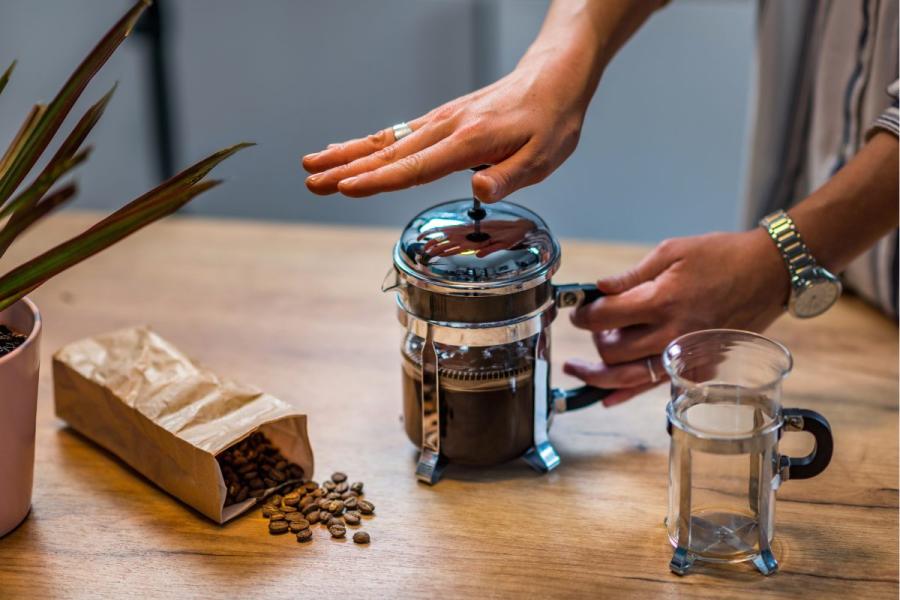
Steep for exactly four minutes. This timing balances extraction, shorter steeps result in weak, sour coffee, while longer steeps create bitter, over-extracted brews. After four minutes, press the plunger down slowly and steadily. Resistance is normal, but if it's difficult to press, your grind may be too fine.
French press flavor profile and benefits
French press coffee delivers a distinctly rich, full-bodied experience that coffee purists often prefer. The metal mesh filter allows coffee's natural oils to remain in the cup, creating a heavier mouthfeel and more pronounced flavor intensity. You'll taste chocolate notes, nutty undertones, and earthy complexity that paper filters often remove.
This brewing method excels at highlighting darker roasts and blended coffees. Brazilian, Colombian, and Guatemalan beans perform beautifully in French press, offering rich, balanced profiles with pleasant sweetness. However, avoid very light roasts, which may taste underdeveloped or overly acidic in French press preparation.
The French press offers remarkable convenience and affordability. Most quality presses cost between $20-50 and require no electricity, making them perfect for camping, travel, or power outages. The brewing process requires minimal skill once you understand the basics, and cleanup involves only rinsing the carafe and plunger components.
One significant advantage is batch brewing capability. Standard French presses make 3-4 cups simultaneously, while larger models can brew up to 8 cups. This makes French press ideal for serving guests or preparing multiple servings for busy mornings.
French Press Tips for Success
Several key practices will elevate your French press coffee from good to exceptional. First, always serve French press coffee immediately after brewing. Unlike drip coffee, French press continues extracting even after pressing, becoming increasingly bitter over time. If you can't drink it all immediately, transfer the coffee to a thermal carafe.
Pre-warm your French press by rinsing it with hot water before adding coffee grounds. This maintains brewing temperature throughout the steeping process and improves extraction consistency. Use filtered water whenever possible, chlorine and mineral imbalances in tap water can significantly impact flavor.
Clean your French press thoroughly after each use. Coffee oils turn rancid quickly and will contaminate future brews with off-flavors. Disassemble the plunger mechanism weekly for deep cleaning, paying special attention to the mesh screens where oils accumulate.
Experiment with steeping times based on your grind size and taste preferences. Ethiopian beans might benefit from 3:30 steeping, while darker roasts might need only 3:45. Keep detailed notes about what works best for different beans and roast levels.