Understanding the parts of a wine bottle
Anatomy of a wine bottle: A guide to parts & shapes.
Have you ever found yourself standing in the wine aisle, staring at the endless rows of bottles, and wondering why they all look so different? You aren't alone! For many of us, wine is a source of joy, a centerpiece for celebration, and a companion to a delicious meal. But beyond the liquid inside, the vessel itself tells a fascinating story.
From the slender elegance of an Alsatian bottle to the sturdy shoulders of a Bordeaux, every curve and contour has a history and a purpose. Describing a bottle of wine isn't just about sounding fancy at a dinner party (though that’s a fun bonus!); it's about deepening your appreciation for the craft and tradition that goes into every vintage.
When we take a moment to really look at a bottle, we start to uncover clues about what awaits us in the glass. Is it a robust red built for aging? A crisp, aromatic white meant to be enjoyed young? The bottle often whispers these secrets before the cork is even popped. Join us as we embark on a visual and tactile journey, exploring the anatomy of a wine bottle from top to bottom. Whether you're a seasoned oenophile or just starting your wine adventure, understanding these parts will add a whole new layer to your tasting experience.
Visual inspection: Reading the bottle before you read the label
Before we even get into the nitty-gritty of the glass anatomy, let's talk about the first things you notice: the silhouette and the shade. The shape and color of a wine bottle are rarely accidental choices. They are deeply rooted in regional traditions, historical logistics, and even the chemistry of the wine itself.
The shape of tradition
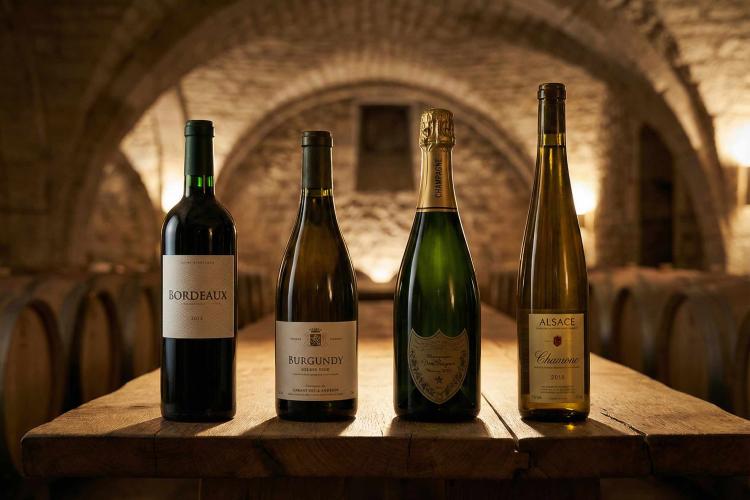
If you line up bottles from different regions, you'll see a distinct lineup of shapes. These aren't just for branding; they are historical markers.
- Bordeaux: Perhaps the most recognizable shape, this bottle features straight sides and high, distinct shoulders. Why the sharp angles? Tradition holds that the broad shoulders help catch sediment in older red wines as you pour, preventing the grit from ending up in your glass. It’s the classic uniform for Cabernet Sauvignon and Merlot blends.
- Burgundy: In contrast to its Bordeaux cousin, the Burgundy bottle has gently sloping shoulders and a wider body. This design was created by glass makers in the 19th century because it was easier to produce. Today, it houses Pinot Noir and Chardonnay, signaling wines that are often more delicate and aromatic.
- Alsace / Mosel: These tall, slender, flute-like bottles are unmistakable. Originating from the Rhine and Mosel regions (bordering France and Germany), these bottles didn't need to be sturdy enough to survive rough sea voyages like Bordeaux or Burgundy wines. They were transported on gentle river barges, allowing for a more delicate glass design. Inside, you'll typically find Riesling or Gewürztraminer.
- Champagne: Form follows function here. The Champagne bottle is thick, heavy, and features gently sloping shoulders. This robust design is essential to withstand the immense pressure of the carbonation inside—up to 90 pounds per square inch!
- Unique Regional Shapes: You might occasionally spot the distinct Bocksbeutel from Franconia, Germany, which looks like a flattened flask, or the curvy, corset-like bottles from Provence. These unique shapes are fierce protectors of regional identity and pride.
The color code
The glass color is more than just an aesthetic choice; it’s a sunscreen for your wine. Light, especially ultraviolet (UV) rays, can damage wine, leading to unpleasant aromas, a fault often described as "light-struck."
- Dark Green and Amber: These are the workhorses of wine protection. Most red wines and wines meant for aging are housed in dark glass to filter out harmful UV light, preserving the wine's integrity over years in the cellar.
- Clear or Flint Glass: You’ll often see Rosé and young white wines like Sauvignon Blanc in clear bottles. Why? Because producers want to show off the beautiful, vibrant color of the wine itself! These wines are generally meant to be consumed quickly, so long-term light protection is less critical.
- Blue: While less common, blue glass has become a trendy choice for certain modern Rieslings or aromatic whites, largely to stand out on the shelf, though it offers moderate light protection.
Decoding the label
While the glass speaks to tradition, the label is the bottle's birth certificate. It can be intimidating, filled with foreign terms and varying layouts, but it holds the key to what you are buying.
- Producer: Who made the wine? This is often the largest text on New World wines (like those from the US or Australia).
- Region: Where were the grapes grown? In Old World wines (like France or Italy), the region is often more prominent than the grape variety, as the location implies the style. For instance, a red "Burgundy" is Pinot Noir.
- Grape Variety: What fruit is in the bottle? New World labels almost always list this (e.g., "Chardonnay").
- Vintage: The year the grapes were harvested. This matters because weather varies year to year, affecting the wine's character. "NV" stands for Non-Vintage, common in Champagne and Port, meaning a blend of years to maintain a consistent house style.
- Alcohol by Volume (ABV): This tells you how rich or light the wine might feel. A 12% ABV Riesling will feel lighter than a 15% ABV Zinfandel.
The parts of a wine bottle: An anatomical tour
Now that we’ve looked at the big picture, let’s dissect the bottle itself. Just like the human body has specific parts with specific functions, so does a wine bottle. Learning these terms helps you describe wine packaging with precision and confidence.
1. The lip (or mouth)
At the very top of the bottle sits the lip. Historically, when corks were the only option, the lip was reinforced with extra glass to prevent the neck from cracking when the cork was driven in or pulled out. Today, it still serves a structural purpose but also aids in pouring. A well-defined lip helps cut the flow of wine cleanly, preventing those dreaded drips from running down the side of the bottle and onto your tablecloth.
In modern screw-cap bottles, the lip is threaded to secure the cap, changing the aesthetic but maintaining the location.
2. The capsule
Wrapping the neck and lip is the capsule. Originally, this foil or wax covering was intended to protect the cork from rodents and insects in damp cellars. It effectively sealed the bottle from the outside world.
In our modern, pest-controlled world, the capsule is primarily decorative and traditional. It’s the tuxedo of the wine bottle, dressing it up and offering branding opportunities.
- Foil/Tin: The most common material, offering a premium look and a satisfying "crinkle" when cut.
- Plastic/PET: Often found on everyday drinking wines; functional and cost-effective.
- Wax: A nod to old-world tradition, wax seals are often found on wines meant for long aging. They provide a hermetic seal but can be a bit messy to remove!
Pro-tip: When opening a bottle, always cut the capsule below the lip. This prevents the wine from flowing over the cut foil, which could taint the flavor with metallic residue or hygiene issues.
3. The neck
The slender part of the bottle below the lip is the neck. This section has a surprisingly vital job. For wines sealed with a cork, the neck is where the magic of aging happens. The narrow space minimizes the surface area of the wine exposed to the air in the ullage (the empty space between the wine and the cork).
When pouring, the neck acts as a funnel, helping to control the speed and direction of the wine as it leaves the bottle. Gripping a bottle by the neck is generally frowned upon in formal service; it's less stable and warms the wine if your hands are hot. However, visually, a long, elegant neck often signifies a sophisticated wine.
4. The shoulders
The shoulders are where the bottle widens from the neck into the body. As we touched on earlier, the shape of the shoulders is the primary indicator of the wine's style.
- High, Angular Shoulders: Seen in Bordeaux bottles. Aside from the sediment-catching function for reds, these distinct shoulders make the bottle easy to stack in a cellar.
- Sloping Shoulders: Seen in Burgundy, Rhone, and Champagne bottles. These imply a wine that likely has less sediment (like white wines or lighter reds like Pinot Noir).
Describing the shoulders gives you an immediate clue about the bottle's heritage. If you're gifted a bottle with high shoulders, you can safely bet it's a Cabernet, Merlot, or perhaps a Sauvignon Blanc. Sloping shoulders? Get ready for Chardonnay, Pinot Noir, or Syrah.
5. The body
The main cylinder of the bottle is called the body. This is the canvas for the label and the vessel that holds the bulk of the liquid. The diameter of the body can vary significantly.
While the shape is largely dictated by the shoulder style, the width of the body can impact storage. Standard wine racks are built for standard bodies. However, many prestige cuvées or premium wines are put in heavier, wider glass to denote quality. While impressive to hold, these "heavyweight" bottles can be a nuisance to fit into a standard wine fridge!
Practically, the body is where you should hold the bottle when pouring (ideally towards the base) to ensure stability and keep your body heat away from the wine, especially for chilled whites.
6. The punt
Flip a bottle over, and you’ll likely see a dimple or indentation on the bottom. This is the punt. No part of the wine bottle has generated more myths and legends than this humble concave feature.
Common myths about the punt
Myth: The deeper the punt, the better the wine.
- Reality: While premium wines often use heavy glass with deep punts, a deep punt does not chemically make the wine better. You can find excellent wine in flat-bottomed bottles and mediocre wine in bottles with deep punts.
Myth: It's there to measure the pouring size.
- Reality: It has no relation to serving size.
The real purpose of the punt
- Structural integrity: Historically, glassblowers created the punt to ensure the bottle could stand upright; a flat bottom was hard to achieve with hand-blown glass. Furthermore, the arch is a strong structural shape (think of bridges). For sparkling wines, a deep punt increases the surface area of the glass, making the bottle stronger against high internal pressure.
- Sediment Trap: In older red wines, the ring around the punt can help collect sediment, keeping it at the bottom as you pour.
- Pouring Aid: Sommeliers often place their thumb inside the punt while pouring to provide better grip and leverage, allowing for that elegant, one-handed pour.
7. The heel
Finally, we reach the heel—the bottom edge or corner where the body meets the base. This provides the stability for the bottle to stand on the table. It is the foundation of the vessel. In glass manufacturing, this area needs to be robust to prevent chipping or cracking when the bottle is set down on hard surfaces like granite countertops or wooden dining tables.
The bottle as a storyteller
Next time you pop a cork or twist a cap, take a few seconds to appreciate the vessel in your hand. Notice the slope of the shoulders—does it whisper of Burgundy or shout of Bordeaux? Feel the weight of the glass and the depth of the punt. Admire the color protecting the precious liquid inside.
Understanding the anatomy of a wine bottle connects us to the history of winemaking. It reminds us that wine is an agricultural product, steeped in tradition and designed with purpose. From the protective lip to the sturdy heel, every part plays a role in delivering that perfect sip to your glass.
So, pour yourself a glass, cheers to the craftsmanship of the glassmaker as much as the winemaker, and enjoy the journey!