
Vermouth
Vermouth is the most important aromatized wine in the world, and arguably the most indispensable ingredient in the history of the cocktail. Without it there is no Martini, no Negroni, no Manhattan. It is also one of the most misunderstood: kept for too long in a warm cupboard, poured in sad, flat dashes into otherwise excellent drinks, and rarely given the attention it deserves as a drink worth pouring on its own.
At its best, vermouth is complex, fragrant, and genuinely delicious — a wine enriched with grape spirit and infused with a blend of botanicals that can include dozens of herbs, roots, flowers, spices, and bark. It has a 250-year history, two great national traditions, and a third one that has quietly been producing some of the finest versions available today.
What makes vermouth, vermouth?
Vermouth is an aromatized fortified wine. It starts as a neutral base wine — almost always white, regardless of the final colour — which is fortified with grape spirit to between 15 and 18 percent alcohol. A blend of botanicals is then introduced, either by steeping them in the wine or by adding concentrated botanical extracts. Sugar is added to balance the bitterness of the botanicals, with the amount determining whether the final product is dry, medium, or sweet.
The defining botanical is wormwood — Artemisia absinthium in the bitter variety, Artemisia pontica in the gentler Roman wormwood. The very name vermouth comes from Wermut, the German word for wormwood. European regulations require that wormwood be present in all vermouth, and that wine make up at least 75 percent of the final volume. Beyond that, each producer works from their own recipe, which is typically a closely guarded secret. Botanical lists can run to 30, 40, or even more ingredients: gentian root, cinchona bark, cloves, cinnamon, cardamom, coriander, citrus peel, vanilla, chamomile, elderflower, and countless others, each contributing a layer to the finished wine.
The result is a drink that is more complex than table wine, more wine-like than a spirit, and more versatile than almost anything else behind a bar or in a kitchen.
A short history
Botanical wines have existed since antiquity — the ancient Greeks and Romans regularly added herbs and spices to wine, partly for flavor and partly because many botanicals were believed to have medicinal properties. The direct ancestors of modern vermouth were the wormwood wines of Germany and Hungary, which were in production by the 16th century.
Modern vermouth was born in Turin in the late 18th century. The Italian herbalist and distiller Antonio Carpano is credited with creating the first commercial sweet vermouth in 1786, sold from his shop near the Piazza Castello. Fashionable Turin cafés began serving it around the clock as an aperitif, and the drink spread rapidly across Europe. In France, the distiller Noilly Prat developed the first commercial dry vermouth in Marseillan in the early 19th century — a paler, crisper, less sweet wine that would eventually define the dry Martini.
By the late 19th century, vermouth was a fixture in cocktail culture on both sides of the Atlantic. The Martini, the Manhattan, and the Negroni all emerged in this period, each built around vermouth as a structural ingredient. The ‘Vermouth di Torino’ designation — a protected geographical indication covering vermouth made in the Piedmont region of Italy — was established to recognise the tradition’s origins.
The main styles
Vermouth exists across a spectrum of colours and sweetness levels. The two historic poles are dry and sweet, but several styles sit between them.
| Style | Color | Sweetness | Classic use | Key brands |
| Dry (French) | Pale gold | Dry | Martini, cooking | Noilly Prat, Dolin Dry |
| Sweet red (Italian) | Dark ruby | Sweet | Negroni, Manhattan | Carpano, Martini Rosso, Cinzano |
| Bianco / Blanc | Pale gold | Medium-sweet | On ice, Martini Bianco | Martini Bianco, Dolin Blanc |
| Rosé / Rosato | Pink | Medium-sweet | Aperitif on ice | Martini Rosato, Noilly Prat Ambre |
| Spanish rojo | Dark ruby | Sweet | Aperitif on ice with orange | Yzaguirre, Perucchi, Arlazón |
A note on Punt e Mes: this Italian sweet vermouth from Carpano is noticeably more bitter than most — the name means ‘point and a half’, referring to its balance of sweetness and bitterness. It is excellent in Negronis and Manhattans where you want more complexity and less sweetness.
A note on Carpano Antica Formula: widely considered the finest commercial sweet vermouth available. Rich, complex, vanilla-forward, and substantially more expensive than standard bottlings. Worth having for sipping and for classic cocktails.
Three traditions
Italian vermouth is the original, centred on the Piedmont region and particularly Turin. It tends to be richer, more aromatic, and more botanical-forward than French vermouth. The protected ‘Vermouth di Torino’ designation requires production in the Piedmont area and the use of Artemisia species local to the region. Key producers include Carpano (the originator), Cinzano, Martini & Rossi, and a newer wave of craft producers.
French vermouth is primarily dry and pale, more wine-forward and less botanical-heavy than Italian. The key region is Chambéry in the Alps (home to Dolin, and the only vermouth with its own Appellation d’Origine Contrôlée) and Marseillan on the Mediterranean coast (Noilly Prat). French vermouth’s neutrality and crispness make it the preferred choice for a dry Martini, where its delicacy complements gin without competing with it.
Spanish vermouth is the quieter of the three traditions but arguably the most vibrant drinking culture. Production is concentrated in Catalonia, Valencia, and the Reus area, using indigenous grape varieties and distinct local botanicals. Spanish vermouths are typically red and sweet, with a particular character of bitter orange and Mediterranean herbs. The ‘hora del vermut’ — the vermouth hour — is a deeply embedded Sunday ritual across Spain: a glass of red vermouth over ice, a slice of orange, a green olive, and whatever tapas the bar has on offer. Key producers include Yzaguirre, Perucchi, Primitivo Quiles, and Arlazón.
How to serve vermouth
Vermouth deserves better than being a minor supporting ingredient. Served well, it is one of the most rewarding aperitifs available.
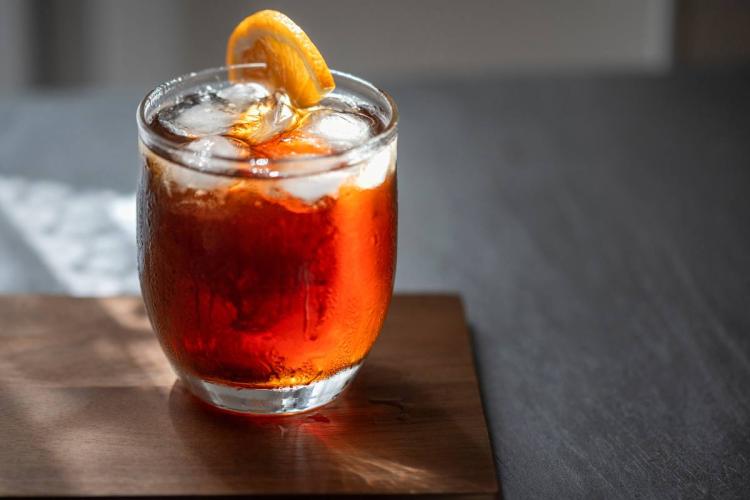
- Red sweet vermouth on ice with a slice of orange and a green olive is the Spanish approach, and it is hard to improve on. The ice dilutes and chills; the orange lifts the aromatics; the olive adds a savoury counterpoint.
- Dry vermouth works well with a splash of tonic or soda water and a twist of lemon or a green olive. This is also how a light, low-alcohol aperitif can be constructed without any spirits at all.
- Bianco vermouth over ice with tonic and lemon — sometimes called a Martini Bianco tonic — is a popular aperitif across Italy and Spain, floral and gently sweet.
- A small glass of sweet vermouth neat , lightly chilled, is how it was originally served in the Turin cafés of the 1780s. If the vermouth is good quality, this is still a fine way to drink it.
Vermouth in cocktails
Vermouth is the structural ingredient that gives classic cocktails their balance and depth. The key is to use a fresh, good-quality bottle — stale vermouth is one of the most common reasons a Martini or Negroni disappoints.
| Cocktail | Vermouth style | Other key ingredients |
| Classic Dry Martini | Dry (French) | Gin or vodka, lemon twist or olive |
| Negroni | Sweet red (Italian) | Gin, Campari, orange slice |
| Manhattan | Sweet red (Italian) | Rye whiskey or bourbon, Angostura bitters |
| Rob Roy | Sweet red (Italian) | Scotch whisky, Angostura bitters |
| Americano | Sweet red (Italian) | Campari, soda water, orange slice |
| Bamboo | Dry (French) | Dry Sherry, orange bitters |
| Martini Bianco | Bianco / Blanc | Tonic water, lemon, on ice |
A word on the Martini ratio: recipes vary from a 1:1 gin-to-vermouth mix (the original proportion of the early 20th century) to the modern tendency to use very little vermouth indeed — the extreme being a ‘Churchill Martini’, in which the vermouth bottle is merely glanced at across the room. Neither is wrong, but a Martini made with a generous measure of good dry vermouth is a more interesting drink than one that is essentially chilled gin with a garnish.
For recipes and a full guide to wine-based cocktails, see our wine cocktails guide.
Vermouth in the kitchen
Dry vermouth is one of the most useful substitutes for white wine in cooking, and in many cases it is actually better. Its herbal complexity adds a layer that a neutral cooking wine cannot match, and its higher alcohol content means it reduces cleanly without turning bitter.
A splash of dry vermouth in a risotto instead of white wine, in a cream sauce for fish, or as the deglazing liquid for chicken or veal adds depth that most cooks find genuinely surprising the first time they try it. Keep a bottle in the fridge and use it freely — a standard bottle will last long enough for several kitchen sessions when stored correctly.
Sweet vermouth also has kitchen applications: in rich braises for beef or pork, in pan sauces where you want the sweetness and botanical complexity without the tannins of red wine, and in vinaigrettes and marinades.
Buying and storing vermouth
Vermouth is a wine, and it goes off. This is the single most important thing to understand about it — and the most commonly overlooked. An opened bottle left in a warm cupboard for six months is not vermouth any more: it is flat, oxidized wine that will ruin any cocktail it touches. The reason so many home Martinis are disappointing is not the gin; it is the vermouth.
Once opened, store vermouth in the refrigerator and treat it with the same respect as an open bottle of white wine. Dry vermouth is the most fragile: finish it within two to three weeks. Sweet and bianco styles are more robust and will keep for four to six weeks.
Buy smaller bottles more frequently rather than large bottles that sit open for months. For serious cocktail making, 375ml bottles are ideal — they are used quickly enough that the vermouth stays fresh throughout. The Bamboo cocktail (dry vermouth + dry Sherry + bitters) is an excellent way to use up the last of a bottle of dry vermouth before it fades.
Serve vermouth cold. A chilled bottle poured over ice into a chilled glass is a completely different drink from room-temperature vermouth poured into a warm glass.
Fortified and aromatized wines — The full family: Sherry, Port, Madeira, Marsala, and more
Wine cocktails — Martini, Negroni, Manhattan, and more
A toast to Sherry — The Bamboo cocktail connects dry vermouth and Sherry
Port wine — Another fortified wine with a strong cocktail presence
Pairing wine and cheese — Vermouth as an aperitif pairs naturally with a pre-dinner cheese selection
Madeira wine — Another aromatized and fortified wine with a kitchen role