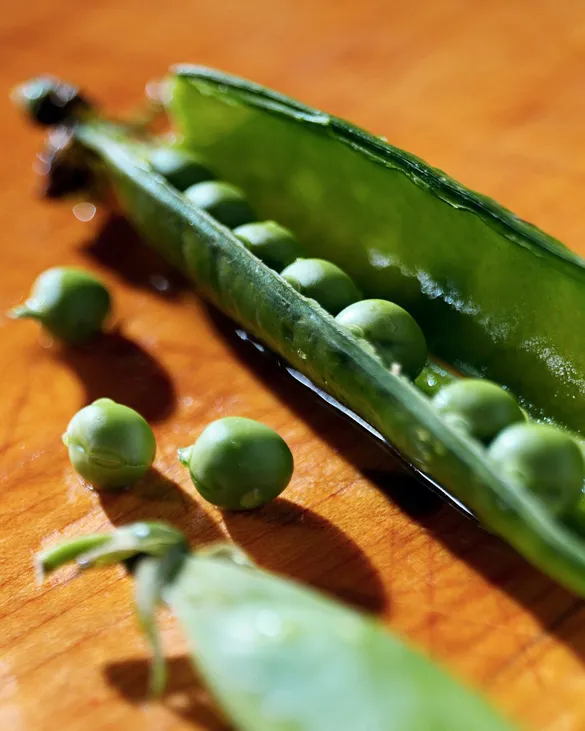
Not only are peas enjoyable to eat, they are highly nourishing.
Have you tried to eat young peas just picked from the plant? Eat them raw. They are tender, extremely sweet and addictive. The taste of freshly picked peas has nothing to do with that of fresh peas bought in a store, probably picked days before, as their sugar quickly turns to starch. That's why frozen peas, frozen within hours of picking, are often sweeter than store-bought fresh ones.
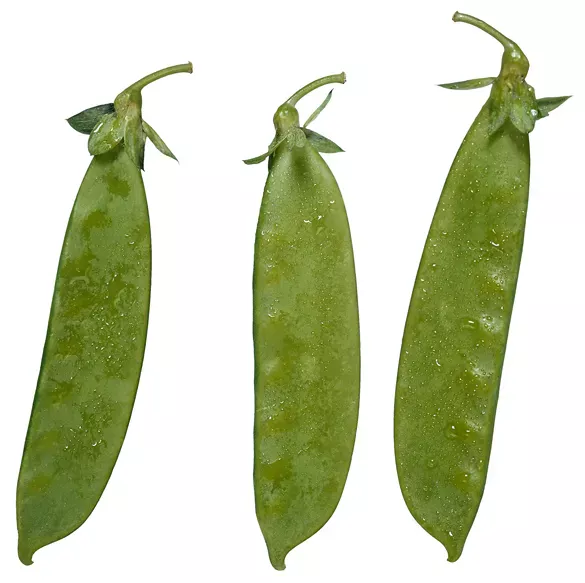
Young peas cooked as soon as they are picked are also a completely different experience. Petit pois, with their tiny seeds, come close to this experience or the snow pea (mangetout) and sugar snap varieties, where the pods are so tender that you don't need to shell the peas, just steam and eat them with a little butter.
Pea trivia
Peas are an ancient food: they were one of the first crops domesticated in the Near East, about 10,000 years ago, and excavations of Bronze Age sites in Europe have also unearthed ancient peas. The Book of Samuel in the Old Testament mentions “parched pulse,” which may refer to dried peas.
Dried peas have made old history, but fresh, tender garden peas only became fashionable in the 16th and 17th centuries.
Storage
Fresh garden peas keep for a day or two at room temperature, but as they rapidly lose sugar and vitamin C, they are better stored cold.
Fridge
Fresh peas will keep 2-3 days - place inside a paper bag or perforated plastic bag and better inside the vegetable drawer.
Freezer
Frozen peas will keep for about 9 months to 1 year. - wash, shell and wash again. Blanch in boiling water for 1 1/2 to 2 minutes, cool quickly in ice water and drain. Distribute in portions and put each one into a freezer bag.
Garden peas are suitable for home canning, but as a low-acid vegetable they must be processed in a pressure canner, following tested instructions. If processed very quickly, frozen peas retain almost all their nutritional value.
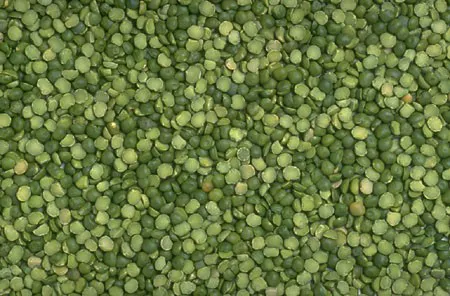
Store the varieties grown to be eaten dried in tight containers as you would with other beans and pulses.
Preparation and use
Shell the peas and boil them for just 3 to 5 minutes, until tender. Drizzle with a little olive oil or toss with butter. They don't need anything more.
Varieties grown to be eaten whole - pod and seed - such as snow peas, are best suited for light cooking: just steam until tender but still crisp, or stir-fry.
The flavor of bacon or ham goes very well with peas. Boil the peas first, then cook the bacon in a pan and add the peas at the end.
Nutritional value
Peas score high in nutrition charts. They have high protein content for a vegetable and this makes them valuable in a vegetarian diet. Apart from protein, peas are an excellent source of fiber, and a good source of vitamins A, C and K and of minerals, especially manganese, phosphorus and potassium.