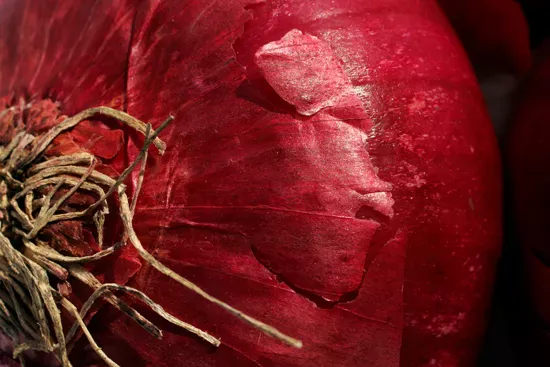
They can make you cry if you let them, but they really are not bad. In some settings they can be stinky beyond belief, but are a fine complement to steaks.
Bulb onions (most varieties) are okay eaten raw. They are thick sliced to be put on burgers and other sandwiches. Onions are also found on tops of salads. Green onions are an ingredient in vegetable dips and on salads. White onions are common in Mexican cuisine. Onions are chopped up for pico de gallo and salsa.
Onions can be purchased at all times of the year. If you can’t find them at your local farmer’s market, you will find them in grocery stores all year round. The all-purpose onion is the yellow onion, while mild red onions are great diced in salads like macaroni or pasta salad. Red onions can also be grilled and fried.
Onion trivia
Just where did onions come from? The onion is believed to have originated in Central Asia and has been grown for thousands of years. Onions come in three colors: white, yellow, and red. Each onion has a papery outer skin that protects the inner softer layers. An onion has several layers that get smaller as you get closer to the middle. It is a veggie that reminds me of a flower. The narcissus is a relative of the onion.
As well as being a main ingredient in onion soup or salads, onions are a condiment.
Storage
Store whole, dry bulb onions in a cool, dry, dark place with good air circulation, such as a mesh bag, but not next to potatoes, as each makes the other spoil faster. They will keep for several weeks. Sweet onions and green onions are best kept in the refrigerator. If you have more onions than you can use, chop them, spread them on a cookie sheet to freeze (no need to blanch), then pack them in a freezer bag or container.
Preparation and cooking
Onions are cut into chunks and skewered for shish kebabs. They are sautéed with steaks and used in sauces. Yellow onions are caramelized to be used in French onion soup. Some people even dare to eat onions raw like an apple. Sweet Vidalia onions are supposed to be so mild that you can.
Onions can be flowered and deep fried to produce the blooming onion so popular in restaurants today. Before the blooming variety became so popular, people ate tons of onion rings.
The first step for many dishes and sauces is frying onion, finely chopped. Onions can be used as condiment.