
Pastry, nuts, a few spices and syrup: the sweet treasures of Turkish confectionery.
Turkey is the bridge between Europe and Asia. Its cuisine shows plenty of Middle Eastern influence, yet Turkey is thoroughly Mediterranean, and for a good number of Turkish dishes you will find a very similar one in Greek cuisine. The same is true of its confectionery, shared in many forms across the lands of the former Ottoman Empire. It is amazing what can be achieved with a handful of ingredients: pastry or dough, nuts, a few spices, and sugar, honey or syrup.
Best of Turkish confectionery
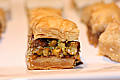
Turkish confectionery offers a wide selection of pastries made from thin dough, nuts and syrup or honey, where the shape and the filling determine the type.
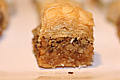
Baklava is made of chopped nuts layered between paper-thin sheets of filo pastry, baked and soaked in syrup. The city of Gaziantep is famous for its pistachio baklava, but walnuts are also popular. Baklava is one of the best-loved treats, and not so difficult to make once you master the art of brushing each sheet of filo with melted butter. That is the trick. Enjoy it with strong Turkish coffee or tea, after a meal or as a mid-afternoon break.
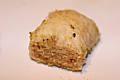
Nut-filled filo fingers, known in Turkish shops as sigara or parmak baklava and around the Eastern Mediterranean by Arabic names such as asabee, are rolled around a filling of very finely chopped nuts, such as cashews or pistachios, then baked and soaked in syrup. They use the same three ingredients found in most Eastern Mediterranean pastries.
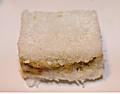
Kadayıf, shredded pastry dough as fine as hair, is used to make a whole family of sweets. Chopped pistachios, or your favorite nut, are pressed between layers of the shredded dough, lightly baked, soaked in syrup and usually cut into squares. Similar squares, sold as ballorieh in Lebanese and Syrian pastry shops, can also be made with coconut.
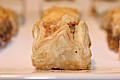
Little filo bundles, like the bukaj of Middle Eastern pastry shops, are pyramid-shaped, like open parcels. Squares of filo pastry are folded around a nut filling, such as cashews or pistachios, baked and dipped in syrup.
And no tour of Turkish sweets would be complete without lokum, Turkish delight: soft, chewy cubes made from sugar and starch, flavored with rosewater, lemon or mastic, often studded with pistachios or hazelnuts and dusted with powdered sugar.
Similar ingredients, very different flavors. All of them are addictive, but mind you, butter, nuts and sugar mean they are rich in calories and fat, so Turkish treats are best enjoyed in small bites. And since nearly all of them contain nuts, check with guests who have nut allergies.