
Gin is a neutral spirit flavored with juniper and other botanicals.
There's no limit to human ingenuity. Anyone who could look at a juniper bush and think, "You know, I'll bet those berries would make a great addition to a fine spirit," has to be some kind of genius. Flavoring a grain spirit with juniper created a drink that has been popular for centuries: gin.
What is gin?
Most gin starts with a neutral grain spirit, distilled in column stills to a very pure product with few congeners, the compounds that can add off-flavors and are often blamed for hangovers. The spirit is then flavored with juniper and other botanicals, like coriander seed, angelica root, citrus peel, orris root and cinnamon, usually by redistilling it with them. The subtle differences between brands come from these often secret recipes.
Though gin is often associated with England, thanks to the popularity of London Dry gin, the Dutch get the credit for inventing its ancestor, genever. In the 17th century, it was sold largely as a medicine. That excuse may be a joke in old movies, but it was a reality centuries ago. Thankfully, we can now enjoy our spirits for the sheer pleasure of it.
Gin became fashionable in England after William of Orange, a Dutchman, took the English throne in 1688, in what became known as the Glorious Revolution. Laws encouraging distilling, and allowing it without a license, made gin cheap, and its popularity soared, even as its style changed. Dutch genever is made from malt wine, distilled from barley and other grains in pot stills, and is closer to whiskey than the lighter London Dry style, which developed in the 19th century.
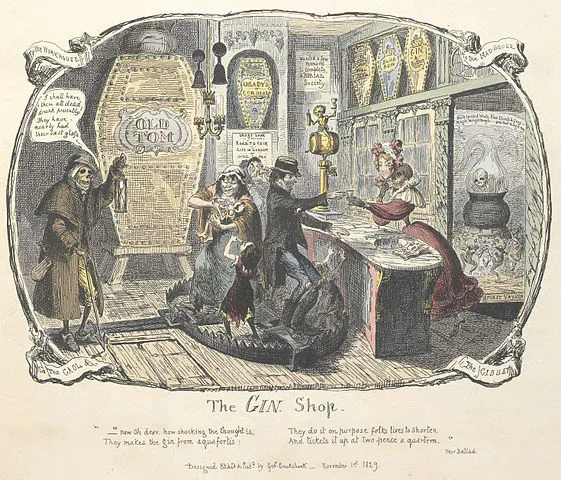
The "gin craze" in London became a serious social problem, and Parliament tried to curb it with a heavy gin tax in 1736. Riots soon followed, and the tax was so widely evaded that it was abandoned a few years later.
Today, London Dry gin is usually bottled at around 40% to 47% ABV. Genever is often fuller bodied, and some genevers are aged in oak casks, again like whiskey, for a rounder, mellower flavor.
Because dry gin is crisp and clean, it is often mixed. The gin and tonic is said to have been born in British India, where tonic water, made with bitter quinine to fight malaria, was made more palatable with gin. Today, a good gin drink has fine qualities that go far beyond the medicinal.
Gins today range from classic juniper-forward London Dry styles to modern gins with citrus, floral, herbal or spicy notes, so it is worth tasting a few to find your favorite.
As the base of a martini, this fine spirit has only one peer: vodka. But those who love a good martini can readily tell the difference. This combination of gin and dry vermouth is bound by no country; it is enjoyed the world over.
For many premium gins, the bottle design seems almost as important as the contents. If you have a home bar, you can fill it with stylish bottles and cocktail tools, like shakers, mixing glasses and bar spoons. A little ceremony and drama always improve the enjoyment of a cocktail.
Whether you prefer it simply with tonic and a twist of lime or in a martini, straight or in a cocktail, one thing remains the same: ingenuity has created a fine spirit for all to enjoy.
To read all about spirits of the earthly kind, the introduction to spirits is the first step.