
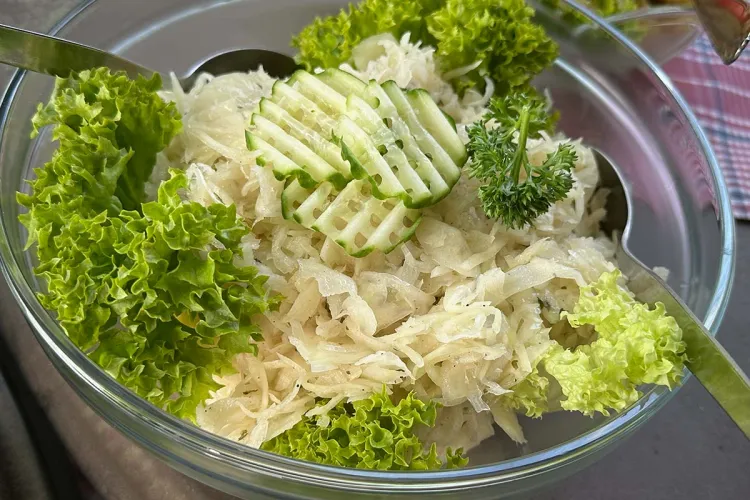
Light, sharp, and refreshing, this German raw cabbage salad (Weißkrautsalat) is white cabbage finely shredded and dressed with vinegar, oil, and a little sugar. It is often mistaken for coleslaw but is a different thing entirely — no mayonnaise, no cream, and a noticeably leaner, cleaner flavour. The cabbage is salted first and left to soften slightly before dressing, which takes the raw edge off while keeping the crunch. Thinly sliced cucumber folded in just before serving adds freshness. It is the natural lighter counterpart to the richer potato salads on a German barbecue table, and one of the simplest and most useful salads in the German home cook’s repertoire.
This is one of the oldest and most widely eaten salads in German home cooking, and its basic formula has barely changed over centuries. Raw cabbage dressed with vinegar and salt has been a staple of Central European tables since long before mayonnaise existed, and it requires no cooking, no specialist ingredients, and almost no equipment.
Ingredients
Instructions
Quarter the cabbage and remove the core. Shred as finely as possible — a mandoline or the fine slicing disc of a food processor gives the best result. A sharp knife works equally well with patience.
Place the shredded cabbage in a large bowl. Sprinkle over the teaspoon of salt, toss well, and leave to rest for 20–30 minutes. The cabbage will soften slightly and release liquid.
Take the cabbage in handfuls and squeeze firmly to remove as much liquid as possible. Transfer the squeezed cabbage to a clean bowl, discarding the liquid.
Whisk together the vinegar, oil, and sugar until the sugar dissolves completely. Season with salt and pepper. Taste — the dressing should be noticeably sharp, with just enough sweetness to balance. It will mellow once on the cabbage.
Pour the dressing over the cabbage and toss thoroughly to coat. Taste and adjust — if it is too sharp, add a pinch more sugar; if flat, add a little more vinegar.
Add the sliced cucumber and fold through gently.
Leave to rest for at least 15 minutes before serving. Garnish with parsley if using. Serve at room temperature or lightly chilled.
Notes
Shred the cabbage as finely as you can. Thick strands do not absorb the dressing properly and the texture is coarser than it should be.
Do not skip the salting step. It softens the cabbage just enough to be pleasant without cooking it, and it removes the excess moisture that would otherwise dilute the dressing and make the salad watery.
Squeeze firmly. After salting, the cabbage needs to be as dry as possible before the dressing goes on. A thorough squeeze makes a significant difference to the finished texture.
Balance the dressing before adding the cabbage. The dressing should taste slightly too acidic on its own — it will soften once mixed with the cabbage. If it already tastes balanced in the bowl, the finished salad will be flat.
Add the cucumber last. Cucumber does not need salting and will go limp if added too early. Fold it in just before the final rest.
Serve on the day. This salad is at its best within a few hours of making. The cabbage continues to soften overnight, which changes the texture considerably.
Variations
A very finely sliced small onion or two thinly sliced scallions add sharpness and a little bite.
One small carrot, coarsely grated and folded in with the cucumber, adds colour and a gentle natural sweetness.
A teaspoon of Dijon mustard whisked into the dressing gives it more body and a mild warmth.
Caraway seeds (1 teaspoon) are traditional in some German regions and add an aromatic, slightly anise-like note. Leave them out, as in this recipe, if you prefer a cleaner flavour.