
Grape
Grapes are truly sweet and delicious fruit. This is one fruit to buy from the organic section at the grocery store.
Frozen grapes are the perfect chilled snack on a hot summer day. Everyone remembers grapes from their childhood, almost as if they were a rite of passage. You have your favorite, either red or green and those little balls of sweet flavor can bring back memories of days long gone with one simple bite. Let's take a look at some of the fantastic reasons why you should continue consuming grapes today.
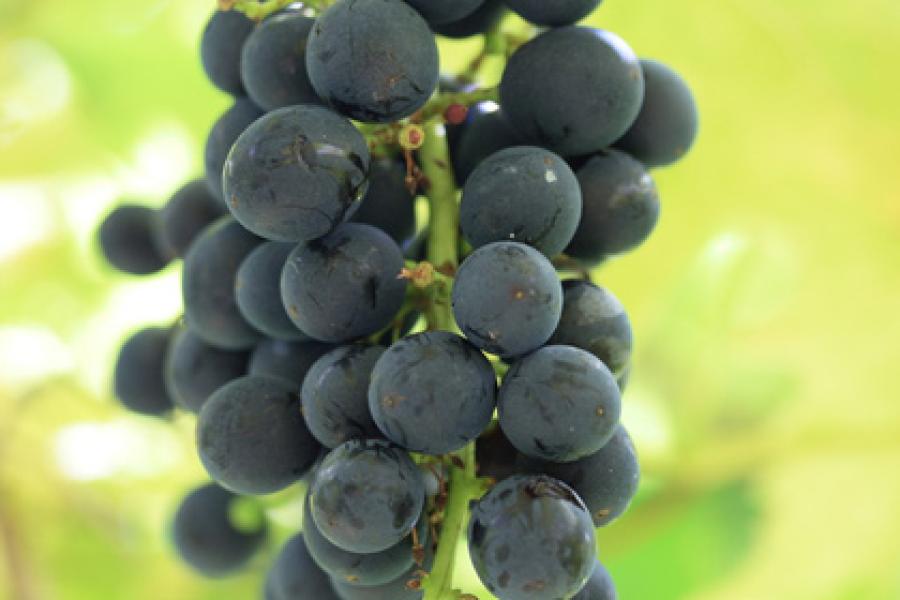
While most grapes come from the same family and genus of plant, there are about sixty different species of this plant type with literally thousands of variables. Table grape varieties, the ones you most often eat, are larger in size, have been propagated to be seedless, and have relatively thin skins. Wine grapes, on the other hand, are usually smaller in size, contain seeds, and have relatively thick skins.
While we often think about the Mediterranean when we envision grape vines, this amazing food is actually native to many parts of the world, including regions in Asia, Africa, and North America. From a commercial standpoint, grapes from around the world have now been hybridized to produce unique blends of flavor, texture, and environmental suitability. Worldwide there are 150 trillion pounds of grapes produced each year. Grape production comes from five major countries - Italy, China, Spain, France and the U.S.
Grapes have multiple personalities
Grapes have a long and abundant history. While they've grown wild since prehistoric times, evidence suggests they were domesticated in Asia around 5000 BC. Grapes were also pictured in ancient Egyptian burial tomb hieroglyphics. During the ancient Greek and Roman civilizations, grapes were revered for their use in the production of wine. They were planted in the Rhine Valley in Germany, a place of notable wine production, in the 2nd century AD. Today there are thousands of varietals of grapes that we know about, both cultivated and wild. In the United States, California reigns as the grape producing state. However, during the winter months, the US imports their grapes from South America and Chile.
It has been long believed that grapes have healing properties. Before scientific research backed up the disease-fighting properties of grapes, ancient China healers mixed grape wine with snakes and frogs to cure illnesses and diseases. Truth is, they probably could have left out the critters and gotten the same cures. Grapes are about 80% water, which explains why it is so satisfying as a low-calorie snack or dessert.
Although most grapes are cultivars of vitis vinifera, the European grape, there are some American and Asian species that make it to the table, either whole, dried, or as grape juice. The American concord grape belongs to the vitis labrusca species, the muscadine, used for jams and to make wine, is the American vitis rotundifolia. The American wild vitis riparia is also used to make wine and jams. In Asia, it is vitis amurensis the most important species.
Preparation and cooking
In 2011 a study was done that found conventionally grown grapes to be one of the most problematic fruits and vegetables in terms of pesticide residues. When you consider that it's estimated that in the United States we each eat 8 pounds of grapes a year, that's a lot of pesticides to be concerned about.
For the best tasting grapes with high concentrations of antioxidants select those that are fully ripe, which means they should be plump and free of wrinkles. Since grapes tend to spoil and ferment at room temperature, they should always be stored in the refrigerator. While freezing detracts from some of their flavor, frozen grapes are a wonderful snack and particularly intriguing to children. To freeze grapes, wash and pat them dry, then arrange in a single layer on a cookie sheet and place in freezer.
Grapes are more than an easy go-to snack. We now know that grapes belong at every course of a meal. Use grapes in salads, salsas, and sandwiches. Cook them, freeze them, or eat them right off the vine. Oh, and don't forget the raisins, and the wine! The versatile grape deserves your attention.
Nutritional value
Grapes have long been classified as a low glycemic index food, with values ranging between 43-53. Better blood sugar balance, better insulin regulation, and increased insulin sensitivity have now been connected with intake of grape juices, grape extracts, and individual phytonutrients found in grapes. One cup of grapes will give you over a quarter of your daily requirement for vitamin C. The elusive vitamin K is also high in grapes. Grapes also contain the hormone and antioxidant melatonin, as well as elements that have anti-bacterial properties. Combine grapes with a complete protein amino-acid source for a very nutritious dish. Many weight conscious people swear by nibbling on grapes to satisfy the urge to snack while providing hydration and nutrients.
Dried grapes
There are three types of dried grapes, currants, raisins and sultanas.
Currants
Currants are small dried fruits made from a seedless variety of grape. They are popular in traditional British and Irish cakes, puddings, and other culinary creations.
- The currants we're discussing here are dried, dark red, and seedless grapes.
They are often called Black Corinth grapes and are dried to produce a black, shriveled, sweet, and flavor-packed fruit. - Originally cultivated in the south of Greece (specifically the island of Zante), they are sometimes referred to as Zante currants in the United States. In the UK and Ireland, they are simply called currants.
- The name "currant" comes from the ancient city of Corinth.
Raisins
Raisins are dried white Moscatel grapes.
They result in a dark, dried fruit similar to currants, with a dense texture and a sweet flavor.
Major producers of Moscatel grapes include the United States, Turkey, Greece, and Australia.
Unlike currants, raisins can absorb other flavors, which makes them popular for soaking in flavored alcohols like brandy or Amaretto before use in cooking.
Sultanas
Also known as golden raisins, sultanas are dried white grapes (seedless variety).
- They are golden in color, plumper, sweeter, and juicier than regular raisins.
- While they can absorb flavors, they don't do so as effectively as regular raisins.
In summary, currants are distinct from raisins and sultanas, each bringing its unique qualities to sweet and savory dishes. So next time you encounter a recipe calling for currants, you'll know exactly what to use!
Grape - grapes, raisin, currant, sultana, must, grapevine.
vitis vinifera and others (vitaceae)