
The lands around the Black Sea have a long, turbulent history, and one of the oldest winemaking traditions in the world.
The Black Sea has a long and often turbulent history. Six countries border it, Bulgaria, Romania, Ukraine, Russia, Georgia and Turkey, and many neighboring countries have a history closely tied to it. That history includes one of the oldest winemaking traditions in the world.
The region
Thousands of years ago, the Black Sea was a freshwater lake. According to one theory, around 5600 BC the rising Mediterranean broke through the Bosporus, sending a huge flood of seawater into the lake, and some have linked this flood to the story of Noah's Ark. If so, the rising water would have scattered the people living around the lake, perhaps helping to explain the wide mix of peoples across the region. Scientists still debate how sudden the flood really was.
The Black Sea covers about 168,000 square miles, nearly the size of California. It was once a busy crossroads of the ancient world. Greek colonists settled its shores from the 7th century BC, and later it came under Roman influence. After the Ottomans took Constantinople, now Istanbul, in 1453, they controlled access to the Black Sea for centuries. The Treaty of Paris, which ended the Crimean War in 1856, opened it to the commerce of all nations.
In the 20th century, many countries around the Black Sea became part of the Soviet Union or fell under its influence. After the Soviet Union broke up in 1991, many became independent, and several have since joined the European Union, turning toward Western markets. Wine is an important asset for many of these countries.
During the Soviet era, Georgia was considered the prime source of quality wine. Traditionally, Georgian wine is made and aged in large clay jars called qvevri, buried in the ground, a method recognized by UNESCO. The practice continues today, alongside more conventional winemaking.
The wine
The history of wine in the region goes back at least 8,000 years: archaeologists have found traces of wine in Georgian pottery from around 6000 BC, among the oldest evidence of winemaking anywhere. Greek and Roman colonization helped wine production prosper.
Over the centuries, wine production declined at times, under Ottoman rule, after the phylloxera epidemic of the late 1800s, which destroyed vineyards across Europe, and during wars and conflicts. In the 1980s, the Soviet anti-alcohol campaign led to many vineyards being uprooted, and political disputes have since disrupted trade with Russia, the region's traditional market.
As a result, wine producers across the region have looked for new markets. Wine lovers have many reasons to be excited: the climate is good, prices are often low and, perhaps above all, the region is a source of wines waiting to be discovered. Its long winemaking tradition has also led to regulations and classifications that define regions and protect quality, and investment has brought modern winemaking know-how and equipment.
DNA testing is revealing a wealth of different, often unique, grape varieties. Some originated in the region and spread elsewhere. One example is Crljenak Kaštelanski, from Croatia: in 2001, DNA tests revealed it to be the same grape as Primitivo in southern Italy and Zinfandel in California.
The challenge for these wines is not so much quality as getting wine drinkers, who already have a huge choice of familiar wines, to try them. Many of the local grape names are unfamiliar and hard to pronounce, and many people choose wine by grape and familiarity. But for adventurous wine lovers, that is exactly the appeal.
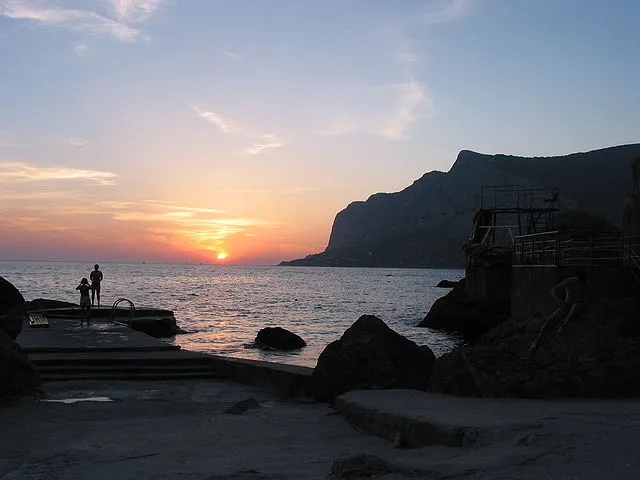
If wine in Europe is Old World and its history goes a long way back, that time-tested experience also extends to Eastern Europe and its neighbors.
Slovenia produces mainly white wine, including many examples of Sauvignon Blanc, Chardonnay and Pinot Gris, and is generally regarded as the most developed wine country to emerge from the former Yugoslavia.
In the former Yugoslavia, North Macedonia produced a large share of the country's wine, and it still makes good-value reds from the local Vranec grape.
From the 18th century, much of Croatia was part of the Habsburg Empire, and the white wines of its continental interior have much in common with those of Austria, while the coast of Istria and Dalmatia is known for reds such as Plavac Mali.
Romania is one of the largest wine producers in the region. After phylloxera, it replanted with vines from France, such as Pinot Noir, Merlot and Chardonnay, alongside local grapes like Feteasca.
Moldova has one of the highest densities of vineyards in the world, and wine is central to its economy. In the 19th century, the Russian tsars ordered the planting of French grape varieties there, so many of its vines are international varieties such as Cabernet Sauvignon, Merlot and Chardonnay.
Turkey is one of the world's largest grape growers, but most of its grapes are eaten fresh or dried rather than made into wine, and wine is heavily taxed.
After discovering Black Sea wines, read the Black Sea wine surprises tasting notes and learn about wine production around the Black Sea.